PHOTO BOOK
Una Mujer en el Desierto
Manuel Vicent
El desierto era ese lugar adonde iban antiguamente los profetas para recibir una revelación. Después de cuarenta días de meditación, con el espíritu esmerilado por el ayuno, se presentaban ante el pueblo con un mandato escrito en tablas de la ley. Este desierto de los redentores era áspero y abrupto. Se trataba de la cima de un monte o de un infinito pedregal sin una sola duna, puesto que muchos redentores en sus delirios veían en las dunas formas de mujer y para ellos suponía una tentación.
El desierto sigue siendo ese lugar donde un viajero, por fin, después de un largo camino. encuentra su alma de arena, que es su propia memoria. También todos los relatos y poemas no escritos forman parte de la arena del desierto que nos habita por dentro. Un buen día, allá por el año 2012, Saleta Rosón sintió el misterioso impulso de viajar sola al desierto de Namibia sin ningún propósito determina-do, tal vez solo el de huir detrás de un sueño que la perseguía desde mucho tiempo. Allí se encontró con las dunas. Corría la brisa dentro y fuera de su sueño. De ese sueño ha surgido este libro.
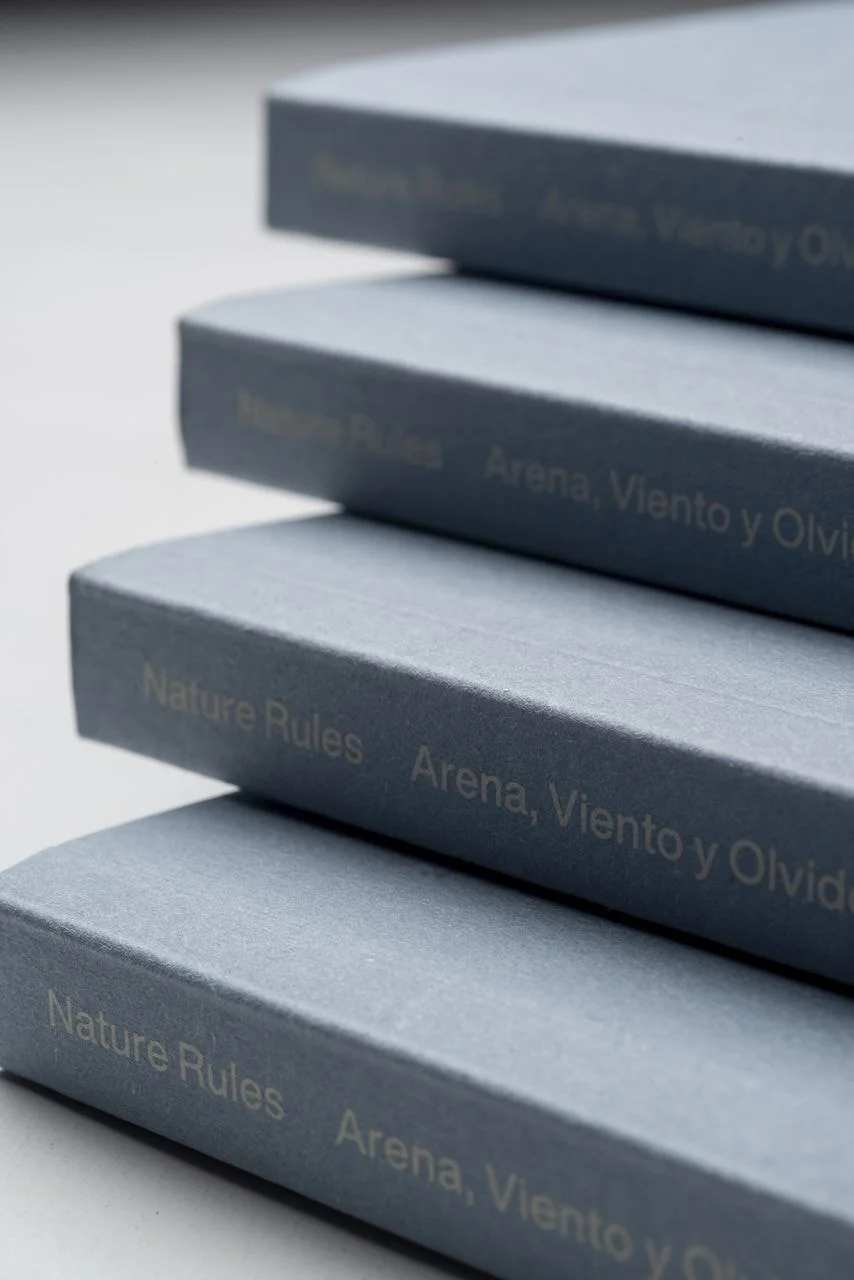
Las dunas son muy volubles. Basta un golpe de viento para que la arena se levante como un velo y discurra a ras del suelo hasta encontrar un brezo o una pequeña roca que le sirva de vástago.En torno a ese eje se va formando de nuevo el suave volumen ligero, voluble. Puede que esa duna que has visto al atardecer la brisa se la haya llevado por la noche para formar otra forma u otro sueño. En este libro Saleta Rosón ha reunido imágenes de sus viajes por el desierto de Namib y de Sharjah, ha atrapado con la cámara la veleidad de las dunas para fijarlas en una de sus infinitas formas, siempre iguales, siempre distintas. Ha fotografiado pueblos abandonados de Al Madam y de Kolmanskop como una lección de historia. Se trata de un documento que más allá de la memoria de todas las formas de la arena, y del tiempo fenecido en los pueblos abandonados es el alma de esta fotógrafa la que está revelada en cada página de este libro.

A Woman in the Desert
Manuel Vicent
The desert was that place where the prophets used to go to receive a revelation. After forty days of meditation, their spirits polished by fasting, they appeared before the people with a mandate written on tablets of the law. This wilderness of the Redeemers was rough and rugged. It was the top of a mountain or an infinite rocky area without a single dune, since many redeemers in their delusions saw the forms of women in the dunes and for them it was a temptation.
The desert is still that place where a traveler, at last, after a long journey, finds his soul of sand. which is his own memory. Also all unwritten stories and poems are part of the desert sand that inhabits us inside. One fine day, back in 2014, Saleta Rosón felt the mysterious impulse to travel alone to the Namibian desert with no specific purpose, perhaps just to flee behind a dream that had haunted her for a long time. There he found the dunes. The breeze blew in and out of his dream. This book has emerged from that dream.
The dunes are very fickle. A gust of wind is enough for the sand to rise like a veil and run along the ground until it finds a heather or a small rock that serves as its stem. Around this axis, the soft, light volume is formed again, fickle. That dune that you have seen at sunset may have been carried away by the breeze at night to form another shape or another dream. In this book, Saleta Rosón has brought together images of her travels through the Namib and Sharjah deserts, she has captured the fickleness of the dunes with the camera to fix them in one of their infinite forms. always the same, always different. She has photographed the abandoned towns of Al Madam and Kolmanskop as a history lesson. It is a document that, beyond the memory of all the forms of sand, and of the time spent in the abandoned towns, is the soul of this photographer that is revealed on every page of this book.