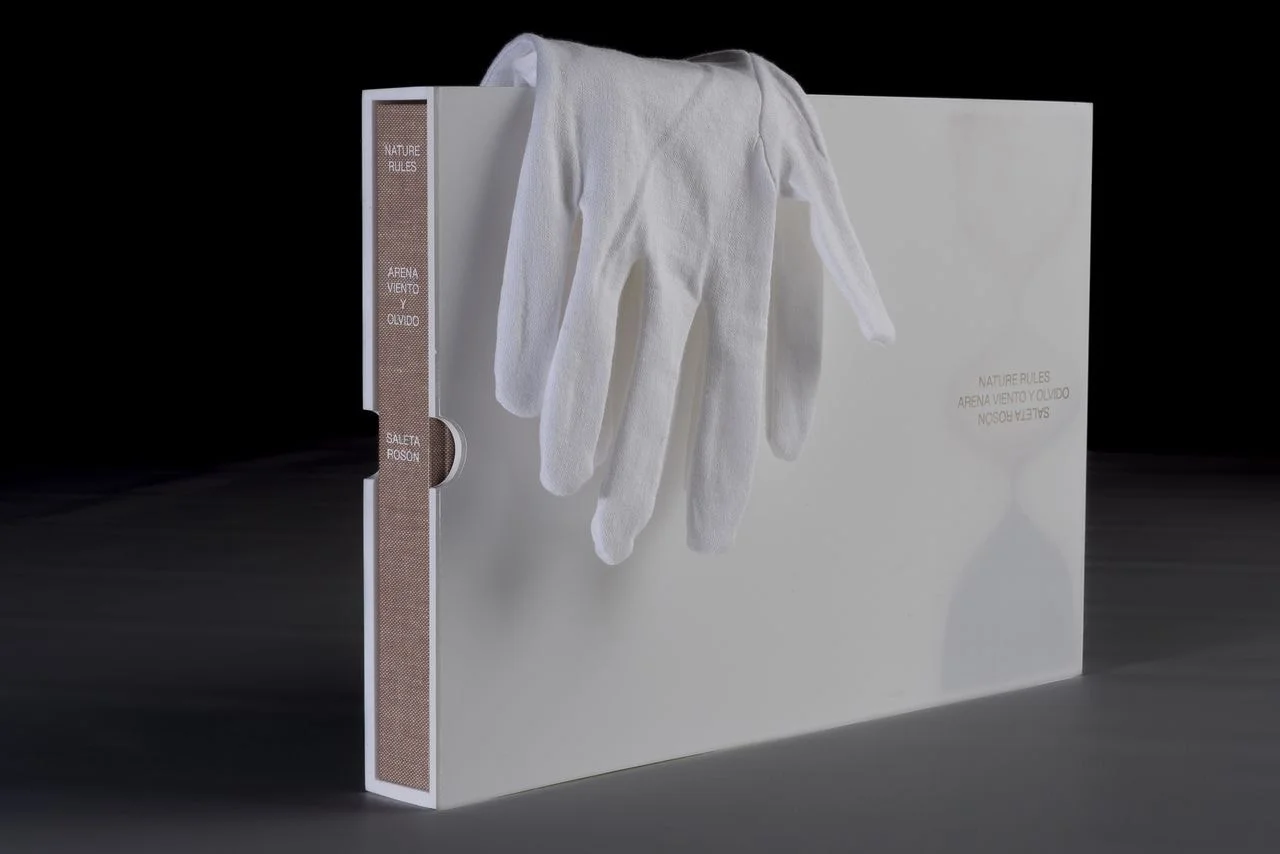
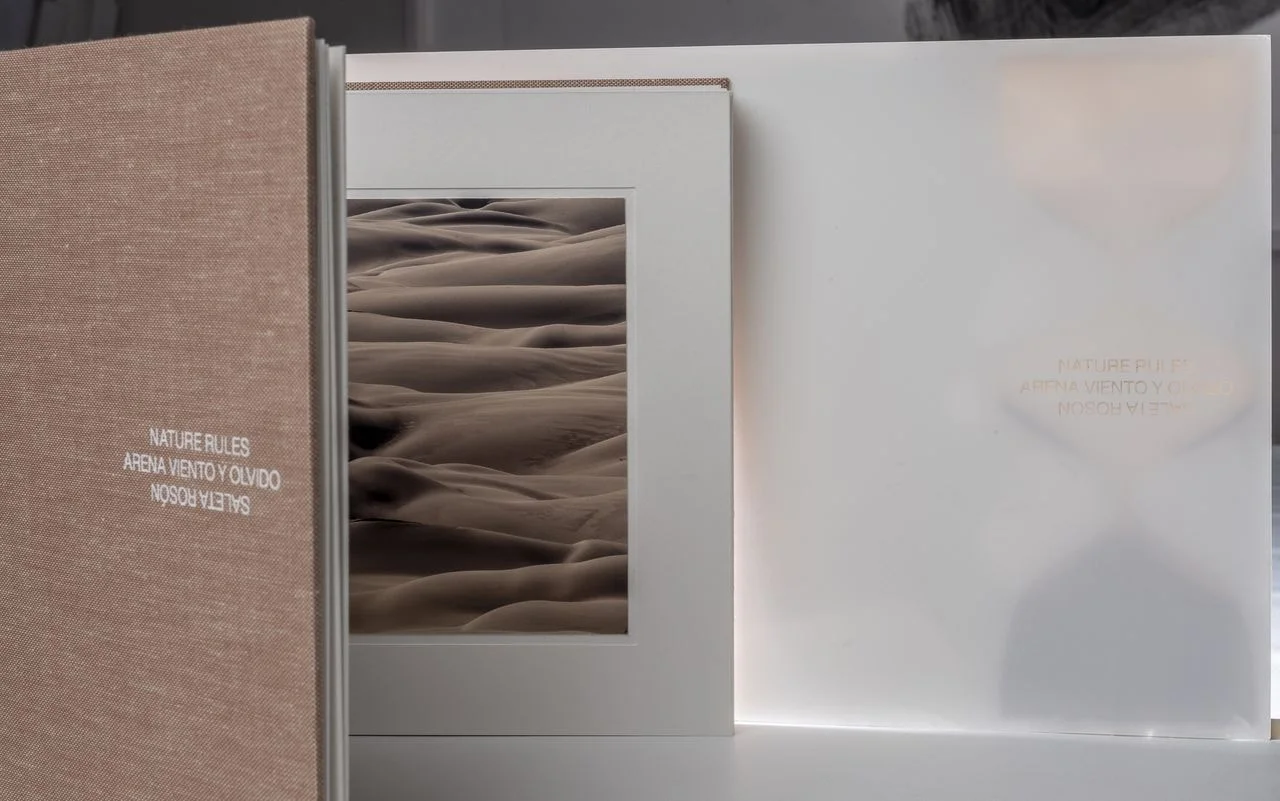
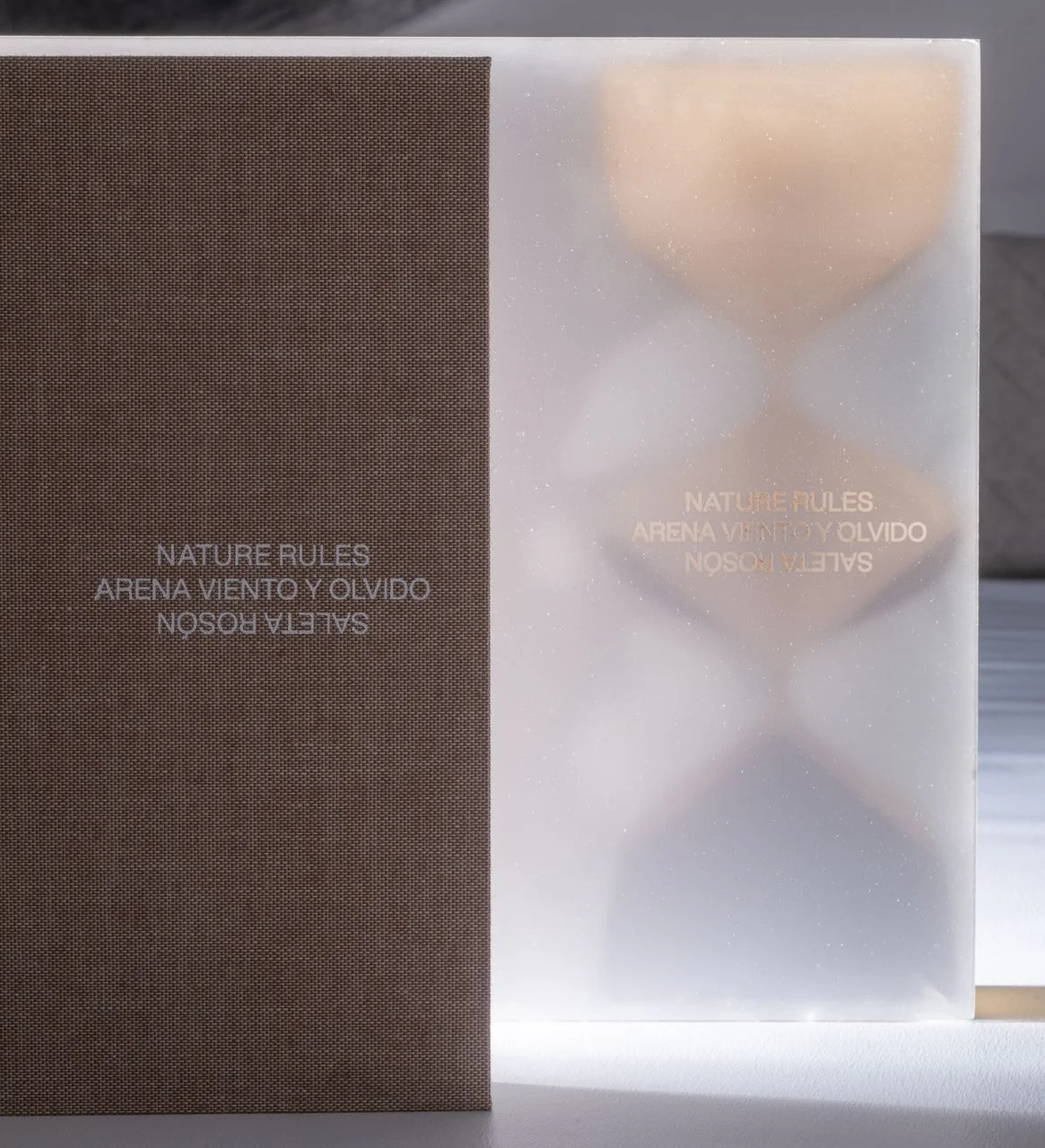
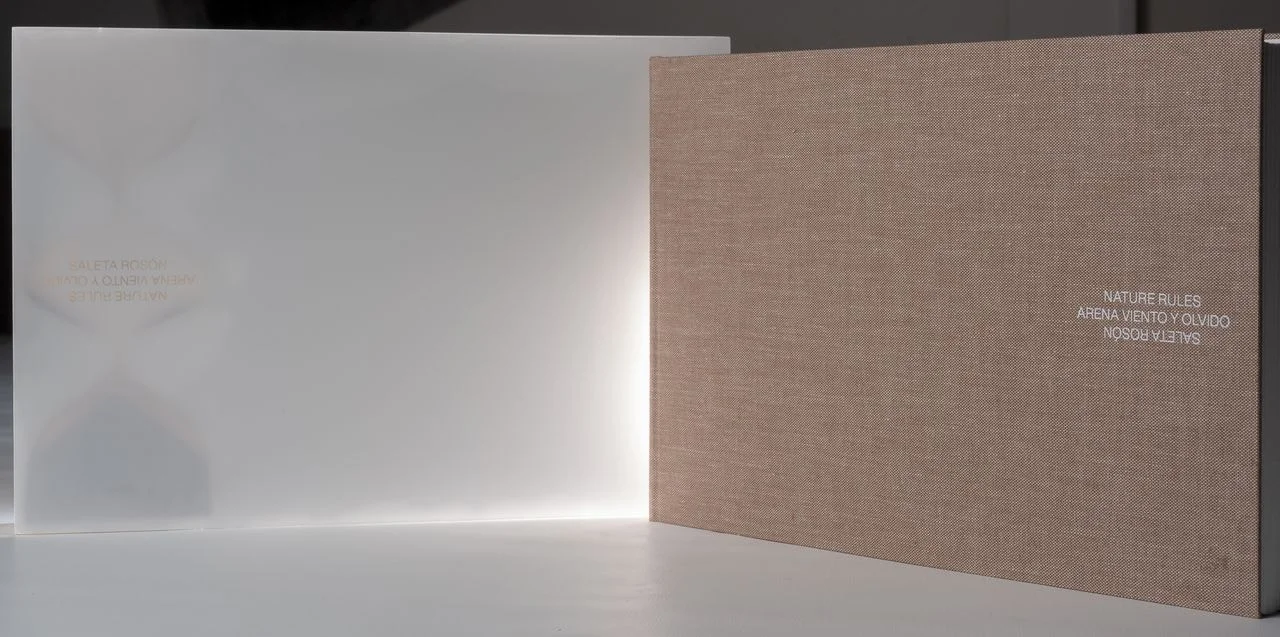
ARTIST BOOK
Arena, Viento y Olvido
Saleta Rosón
Siempre he sido una apasionada de la naturaleza en todas sus facetas, y también una defensora respetuosa de su equilibrio, e incluso a veces de su furia. Me atrevería a decir que las más maravillosas obras de arte no son fruto del hombre. Mirando con un ojo atento y sensible, la naturaleza nos ofrece una variedad ilimitada de recursos artísticos que nadie jamás podría crear en una sola vida.
Se puede decir que descubrí el desierto tardíamente. A principios del año 2006, me encontraba en un Congreso de Derecho Marítimo en Cape Town, y era la primera vez que viajaba a África (después vendrían muchas más). Tengo una gran amiga mexicana, Ana Luisa Graf de Melo, a la que admiro y quiero, de la cual a lo largo de mi vida he aprendido muchísimo. Ella acababa de llegar de Namibia y me relató su viaje y su experiencia de tal forma que me impactó profundamente. Me habló de un lugar donde el silencio, las estrellas y las dunas eran una especie de bálsamo para el espíritu y para la vista. Que una mujer como ella me hablara de esa forma de un lugar, me caló muy dentro y ya no tuve otro pensamiento que realizar ese maravilloso viaje que ella me relató en un contexto muy distinto.
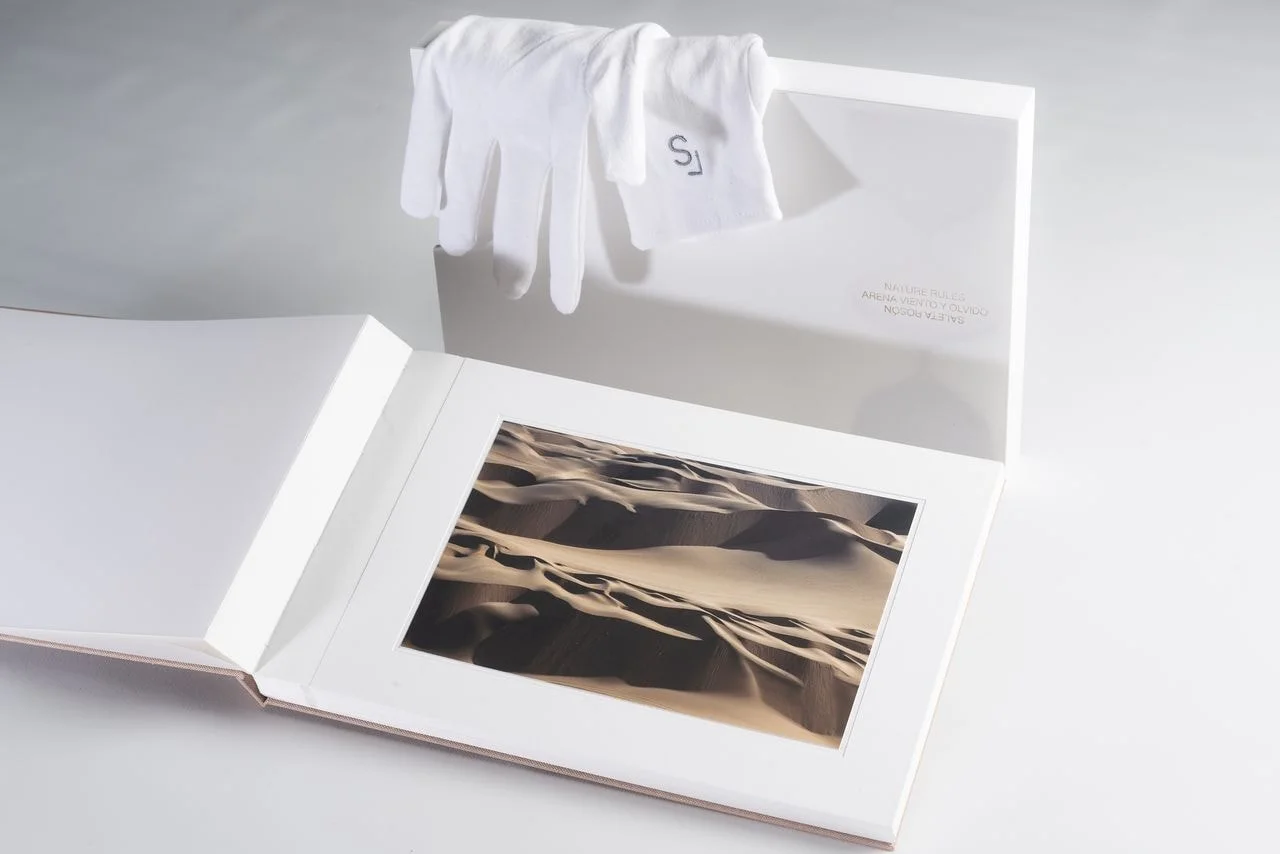
Por avatares de la vida hasta el año 2012 no pude constatar esa certeza. Viajé a Namibia, conocí el desierto más antiguo del mundo, el Namib y me atrapó para siempre. Esa primera vez asistí fascinada a la imponente belleza de Sossusvlei, con dunas de hasta 400 metros de altura, su arena rojiza y las formas que van cambiando mientras la luz del día va naciendo, crece y finalmente se desvanece en unas puestas de sol que tiñen aún más la arena de unos colores que van desde el amarillo al rojo, pasando por el naranja. Pura magia ¡Esas noches estrelladas observando la Cruz del Sur, los planetas y las estrellas a través de un telescopio! Aún recuerdo cómo me emocioné al ver los anillos de Saturno. Allí interioricé y fui verdaderamente consciente de lo insignificantes que somos.
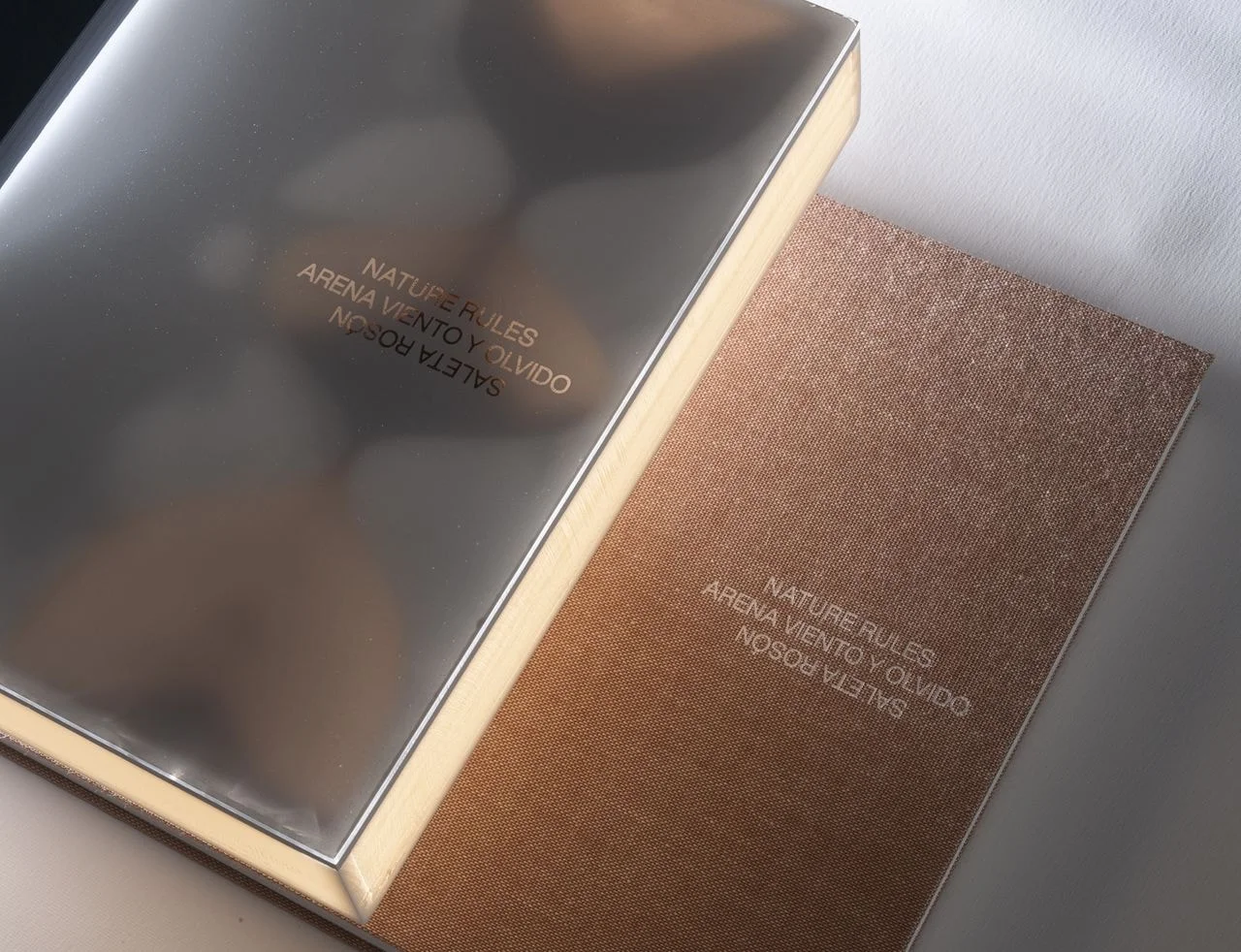
Sand Wind and Oblivion
Saleta Rosón
I have always been passionate about nature in all its facets and a respectful protector of its balance, and sometimes even of its fury. I would even go as far as to say that the most marvellous works of art are not the result of mankind’s doing. Looking with an attentive and sensitive eye, nature offers us an unlimited variety of artistic resources that no one could ever create in a single lifetime.
You could say that I discovered the desert late in my life. In early 2006, I attended a Maritime Law Conference in Cape Town, and it was the first time I had travelled to Africa (many more trips would follow). I have a good Mexican friend, Ana Luisa Graf de Melo, who I admire and love, and from whom I have learned a lot throughout my life. She had just arrived from Namibia and told me about her trip and her experience in a way that had a profound impact on me. She told me about a place where the silence, the stars and the dunes offered a kind of solace for the spirit and the eyes. The way that she described it left me wanting to experience it for myself, and all I could think about was going on that wonderful trip that she told me about in a very different context.
Due to the ups and downs of life, I was not able to make this happen until 2012. I travelled to Namibia, went to the oldest desert in the world, the Namib, and I was immediately captivated by it. That first time I was fascinated by the imposing beauty of Sossusvlei, with dunes up to 400 metres high, its reddish sand, and the shapes that change as the daylight rises, grows and finally fades into sunsets that turn the sand a mixture of colours ranging from yellow to red and orange. Pure magic. Those starry nights gazing out at the Southern Cross and admiring the planets and the stars through a telescope! I still remember how excited I was to see Saturn’s rings; it was there when it really sank in for me and I became truly aware of how insignificant we are.