LA MEMORIA DEL DESIERTO
10.10.2024 – 15.01.2025 – Instituto Cervantes de Lisboa. IMAGO LISBOA Photo Festival
“El desierto sigue siendo ese lugar donde el viajero, por fin, después de un largo camino, encuentra su alma de arena, que es su propia memoria”
Manuel Vicent.
En el siglo XX, la fotografía se convirtió en un medio poderoso para documentar el impacto de la acción humana sobre la naturaleza. Ante la magnitud de la crisis ambiental, el arte no solo documenta, sino que también se erige como un agente de concienciación y cambio. Los artistas contemporáneos utilizan su obra para despertar la sensibilidad ecológica y promover una reflexión profunda sobre nuestra relación con la naturaleza. La obra de la artista Saleta Rosón es un ejemplo destacado de cómo el arte puede ser utilizado para generar conciencia ambiental. Sus fotografías no solo nos muestran el impacto de la acción humana y el abandono, sino que también nos invitan a reflexionar sobre las consecuencias a largo plazo de nuestras decisiones.
El trabajo de Rosón se puede comparar con otros artistas que utilizan su arte para llamar la atención sobre la crisis ecológica. Olafur Eliasson, con su instalación “Ice Watch”, traslada bloques de hielo del Ártico a plazas públicas para concienciar sobre el cambio climático. Las imágenes de Sebastião Salgado, especialmente en su serie “Génesis”, capturan la belleza prístina de los lugares más remotos del planeta, contrastándola con las escenas devastadoras de deforestación, minería y explotación industrial. Estas imágenes no solo documentan la destrucción, sino que también sirven como un llamado urgente a la acción y la conservación. Sin olvidarnos del proyecto “The Ghost Forest” de Angela Palmer, donde la artista trasladó diez árboles muertos de una selva tropical africana a Trafalgar Square en Londres, creando una instalación impactante que simboliza la destrucción de los bosques tropicales. La obra no solo atrajo la atención sobre la deforestación, sino que también sirvió como punto de partida para discusiones y eventos sobre la sostenibilidad y la conservación de los bosques.
En este contexto, la obra de esta fotógrafa adquiere una relevancia particular. Rosón se especializa en la captura de ciudades abandonadas que han sido invadidas por la arena del desierto, una poderosa metáfora de la naturaleza recuperando su espacio frente a la acción humana. Sus fotografías, de gran dimensión, no solo documentan la realidad física de estos lugares, sino que también invitan a una profunda reflexión sobre el paso del tiempo, el abandono y la resiliencia de la naturaleza.
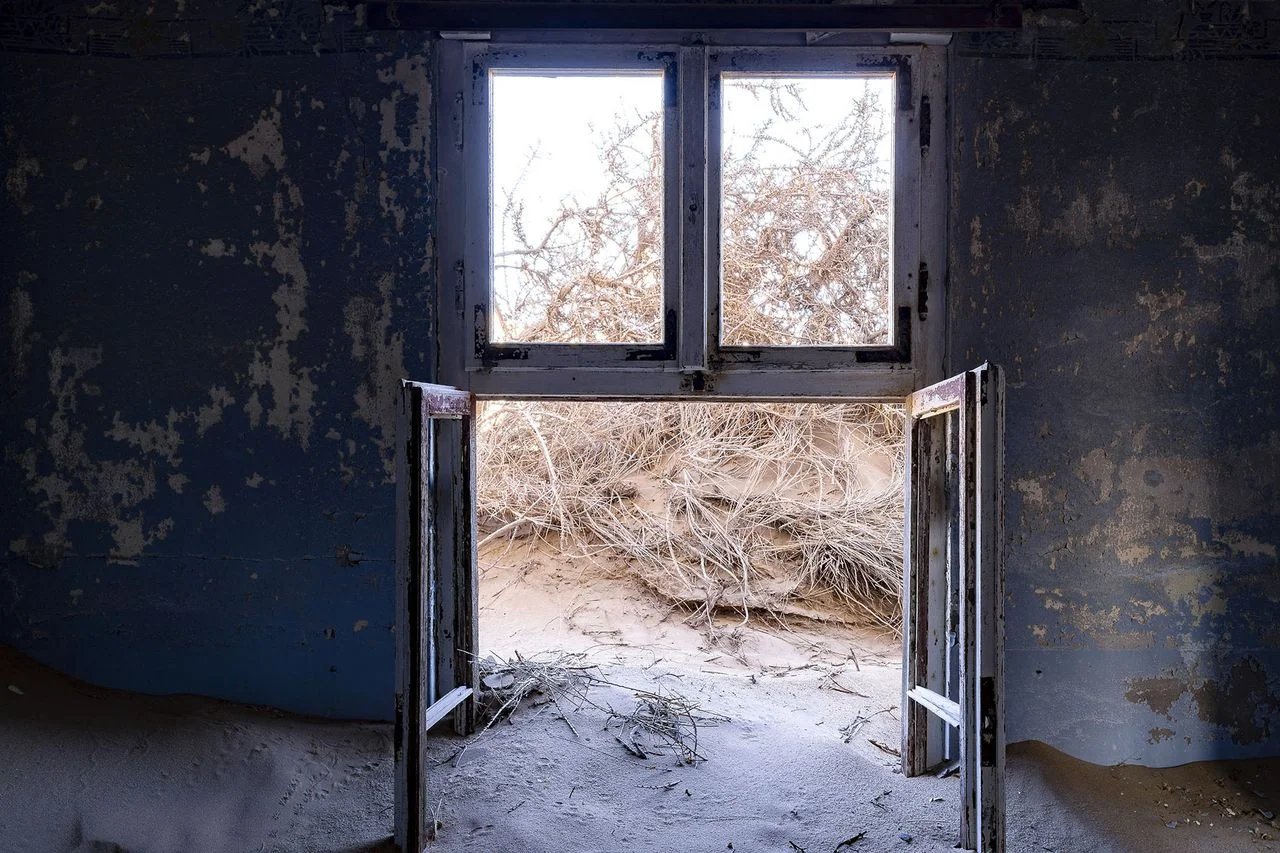
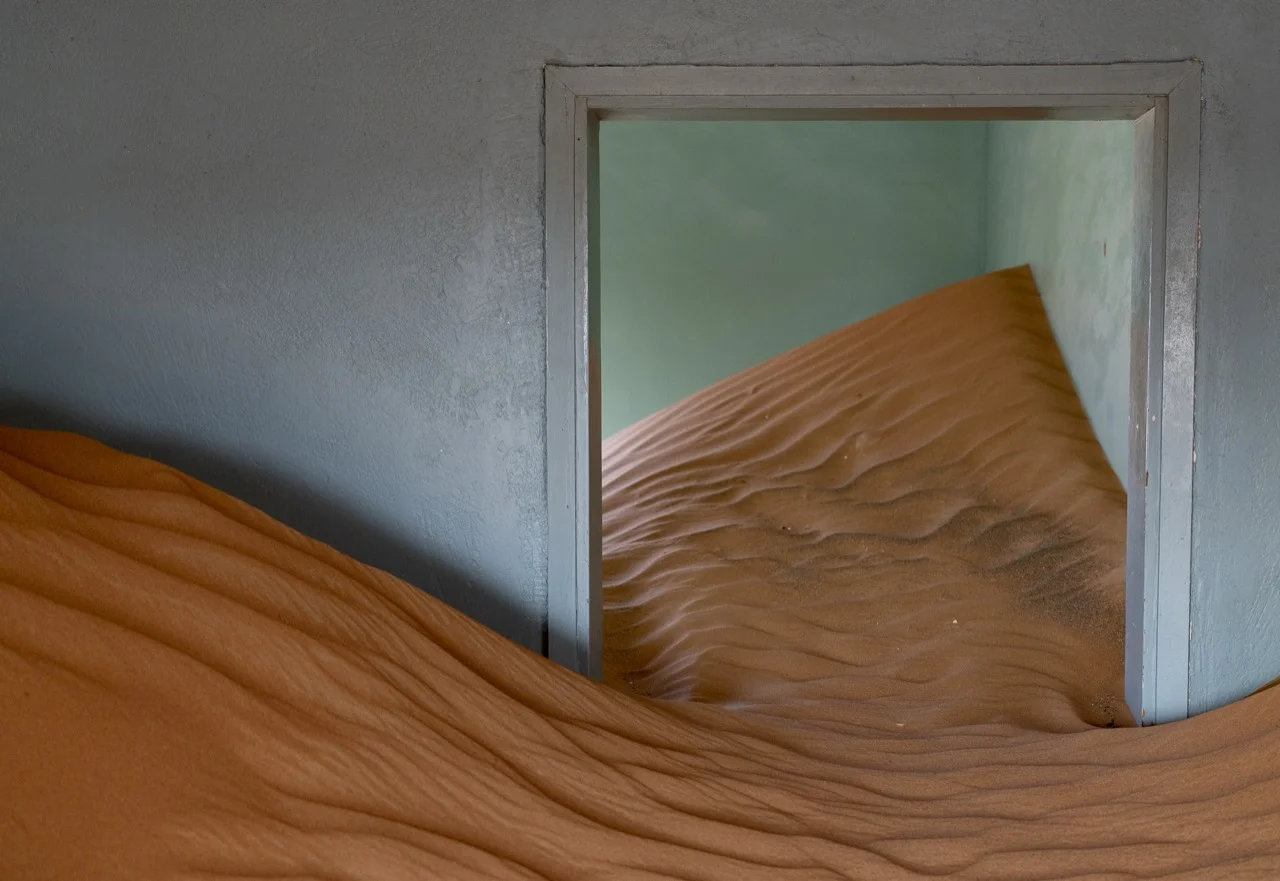
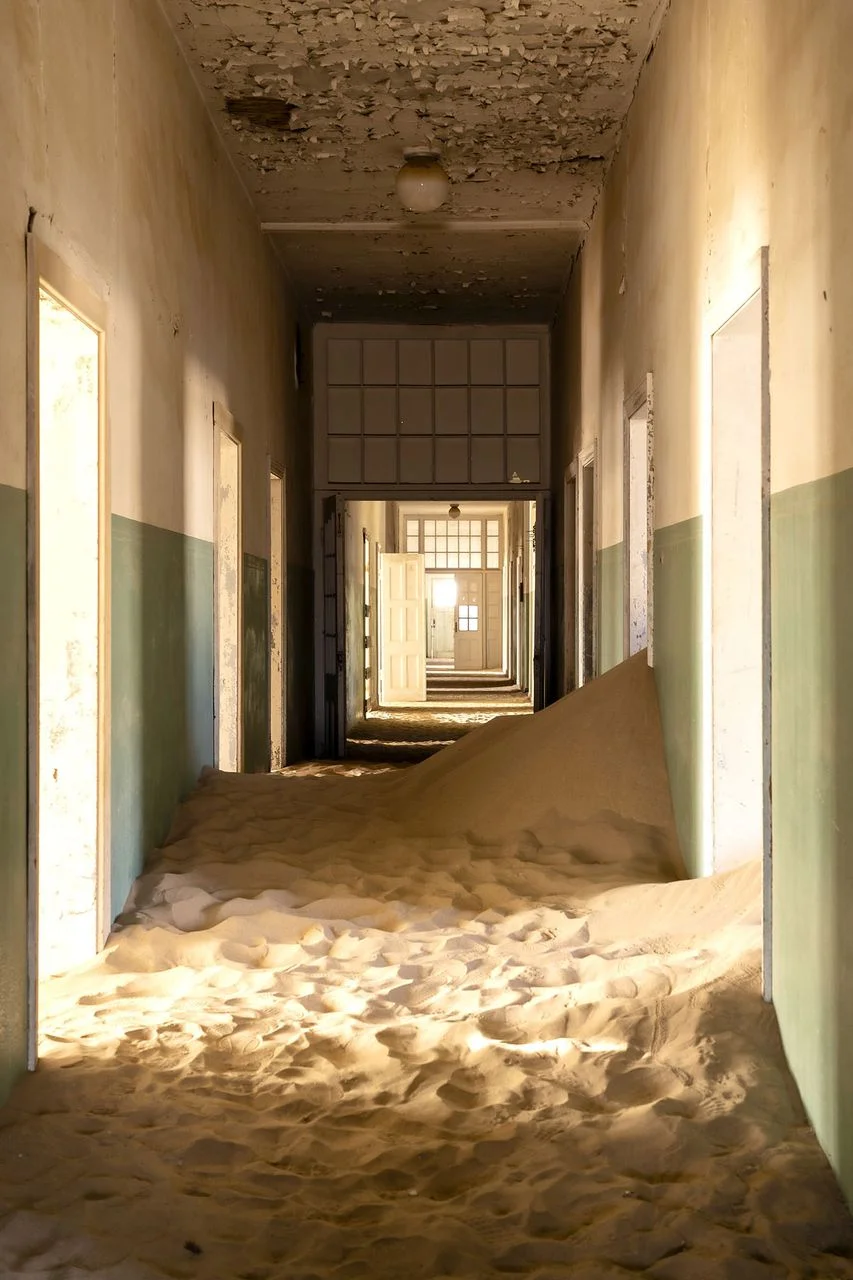
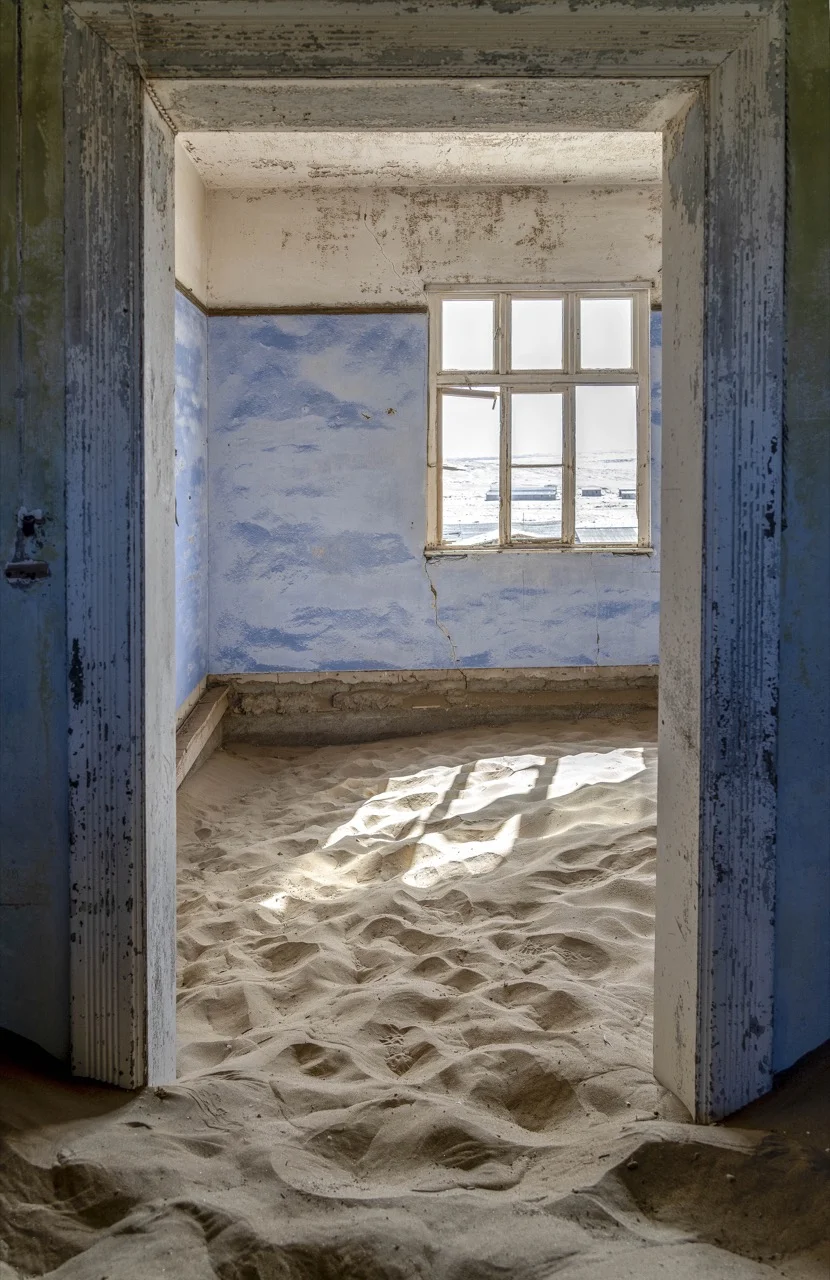
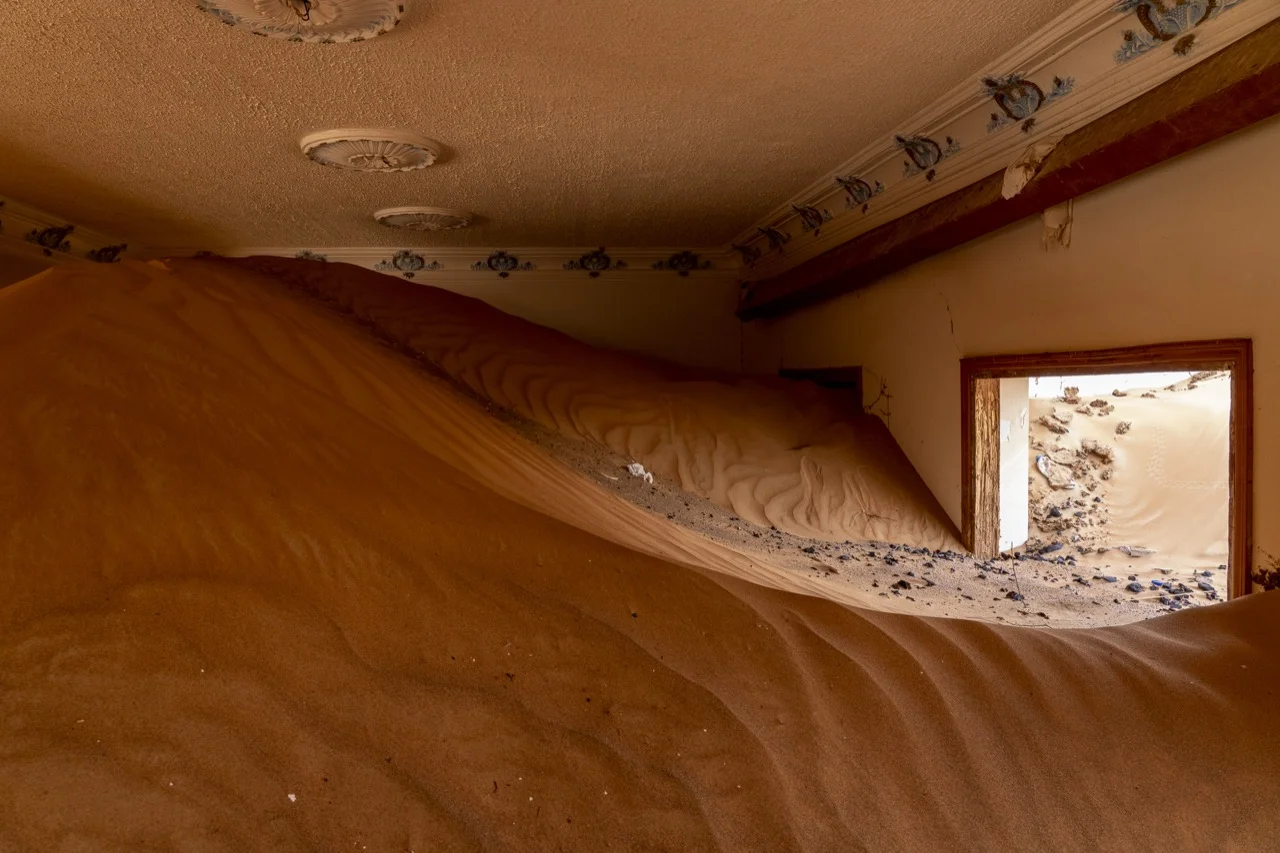
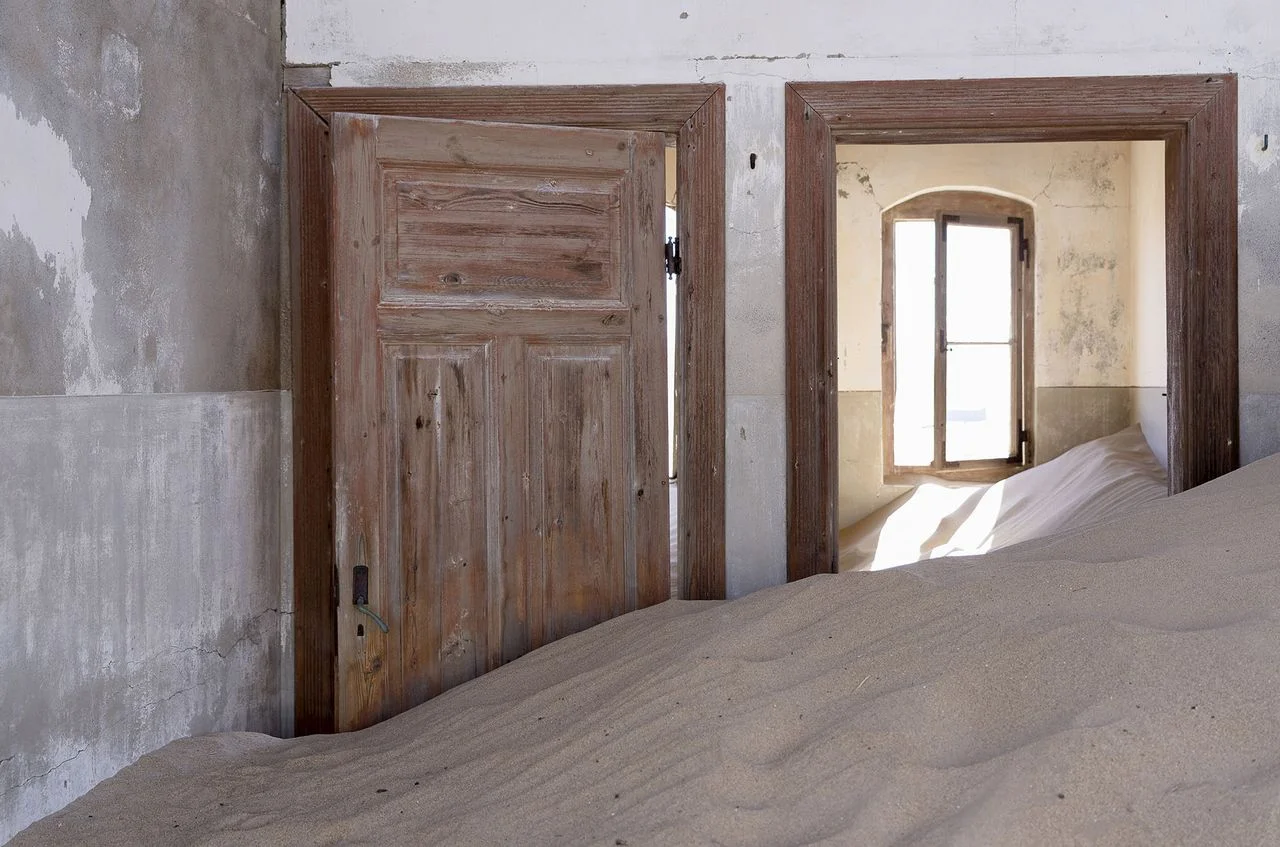
“La memoria del desierto”, de Saleta Rosón nos traslada a dos ciudades abandonadas: una colonial bajo el nombre de Kolmanskop, construida por los alemanes en 1908 en el desierto del Namib (Namibia) para alojar a los trabajadores de las minas de diamantes. La otra es Al Madam, una urbe levantada entre los años 1970 y 1980 en el interior del Emirato de Sharjah (Emiratos Árabes Unidos), a tan solo 60 km de la ciudad de Dubái. Estas dos ciudades fueron creadas por el hombre en el desierto, ocuparon la naturaleza interviniendo su ciclo vital y cambiando el destino de aquellas dunas, arenas o sedimentos que durante siglos sustentaron ese ecosistema. En las sucesivas décadas el hombre se convirtió en un invasor de esos lugares desérticos, cuando no los necesitó más y los abandona, la naturaleza comienza su particular reconquista. La obra de Saleta documenta este proceso de ocupación natural, capturando la belleza y la melancolía de estos lugares desérticos en su transición de ciudades a ruinas silenciadas por el tiempo y la arena. A través de su lente, podemos observar cómo la naturaleza empieza a restaurar su dominio, demostrando la inevitabilidad de su fuerza y resistencia.
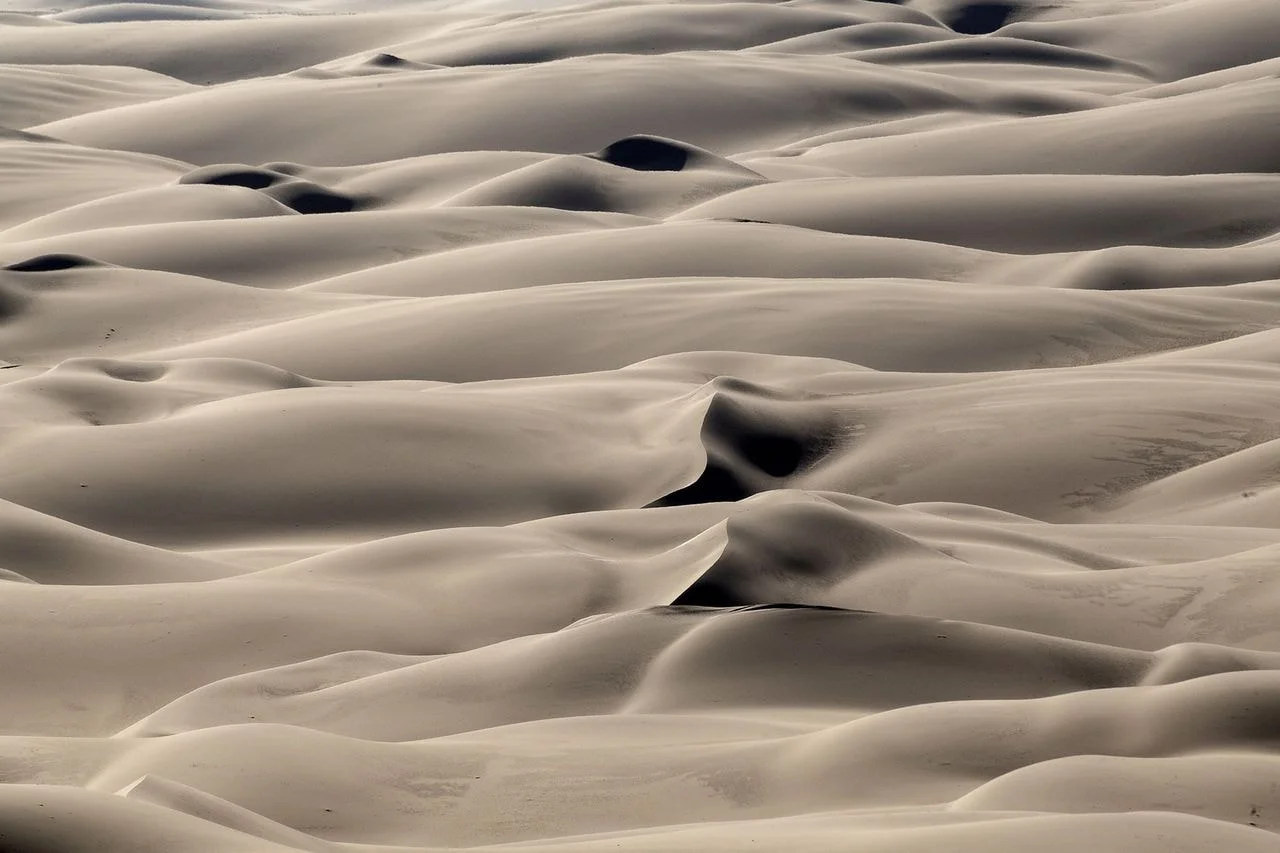
El viento suspende en el aire partículas o sedimentos en forma de granos de arena, comenzando un viaje sin destino fijo, aleatorio, donde su único objetivo es encontrar un lugar donde depositarse. Esa arena busca un nuevo hábitat donde reposar, un espacio donde ir construyendo un nuevo paisaje. Se aprovecha de cada piedra para apoyarse, cada grieta para introducirse para moldear nuevas formas en esas ciudades abandonadas. Este abandono es el origen de otro entorno, construido esta vez por la naturaleza. Sedimento a sedimento, vuelve a crear un paisaje de arena en constante movimiento y transformación.
La fotógrafa Saleta Rosón llega a los orígenes del mundo hace una década, para comenzar un viaje sanador, con la intención de buscar la calma, escuchar los silencios y aplacar los ruidos que traía consigo; se reencuentra consigo misma y, a la vez, con el desierto. Saleta comenzaba su personal peregrinación hacia lo más profundo de su ser, buscando en la inmensidad del desierto aquello que tiempo atrás anhelaba, un lugar provocador lleno de contrastes, de una belleza sublime, donde la naturaleza se convierte en el gran creador de una de las mejores obras de arte jamás admirada por el hombre. El desierto es el canal, el camino, hacia un lugar enigmático y a la vez mágico.
Una tormenta de creatividad la empujó a ciudades atrapadas en el tiempo, en donde muros y ruinas le recordaron lo frágiles que somos, lo insignificante que es el ser humano y lo soberbio en pensar que podemos dominar a la naturaleza. Aquellos primeros trabajos la confirmaron como creadora insaciable, siempre detrás de un objetivo buscando aquel encuadre, aquella perspectiva, aquel juego de luz y sombra; lo auténtico. Un sincero retrato del poder de la naturaleza y su incansable lucha por reconquistar el lugar que algún día le perteneció. Arenas en constante movimiento, con el fin de recuperar aquello que tiempo atrás le fue sustraído por el ser humano. Ahora lo recupera con fuerza creando un lugar diferente, una perfecta combinación de texturas, formas y tonalidades; colores oxidados por el paso del tiempo, arquitecturas abandonadas que se convertirían en ruinas sin memoria si Saleta no hubiese decidido rescatarlas del olvido.
Saleta Rosón crea un vínculo entre ella, el objetivo de su cámara y la naturaleza que retrata. Lo realiza con gran manejo de la técnica, pero sobre todo con una mirada respetuosa y fiel a lo que la naturaleza ha vuelto a construir. La belleza que atrapa en su objetivo es real, aunque retrata paisajes que pueden parecer surrealistas, a través de originales perspectivas y superposiciones de diferentes planos. Lugares que invitan al espectador a interactuar como si de una pintura hiperrealista se tratase: la arena consigue salir del encuadre, invita a cogerla, tocarla, apartarla, descubrir que esconde, por qué está ahí. Esa sensación te invade y traslada a otros mundos donde vuela la imaginación anhelando una reconstrucción del imaginario, de esas ciudades abandonadas, muros derruidos por el paso del tiempo, estancias deshabitadas, restos de escombros, basura, y huellas provocadas por el viento o por algún animal.
En resumen, el proyecto expositivo “La memoria del desierto” no solo nos muestra las huellas del paso del tiempo, sino también nos invita a reflexionar sobre la relación entre la naturaleza y la intervención humana. Nos recuerda que, aunque los seres humanos pueden transformar y dominar la naturaleza por un tiempo, al final, la naturaleza siempre encuentra una manera de recuperar su espacio.
Comisario: Antonio Cervera
‘The desert is still that place where the traveller, at last, after a long journey, finds his soul of sand, which is his own memory’.
Manuel Vicent.
In the 20th century, photography became a powerful medium for documenting the impact of human action on nature. In the face of the magnitude of the environmental crisis, art not only documents, but also stands as an agent of awareness and change. Contemporary artists use their work to awaken ecological sensitivity and promote a profound reflection on our relationship with nature. The work of artist Saleta Rosón is an outstanding example of how art can be used to raise environmental awareness. Her photographs not only show us the impact of human action and neglect, but also invite us to reflect on the long-term consequences of our decisions.
Rosón’s work can be compared to other artists who use their art to draw attention to the ecological crisis. Olafur Eliasson, with his installation ‘Ice Watch’, moves blocks of ice from the Arctic to public squares to raise awareness about climate change. Sebastião Salgado’s images, especially in his ‘Genesis’ series, capture the pristine beauty of the most remote places on the planet, contrasting it with the devastating scenes of deforestation, mining and industrial exploitation. These images not only document destruction, but also serve as an urgent call to action and conservation. Not to forget Angela Palmer’s ‘The Ghost Forest’ project, where the artist moved ten dead trees from an African rainforest to Trafalgar Square in London, creating a striking installation symbolising the destruction of tropical forests. The work not only drew attention to deforestation, but also served as a starting point for discussions and events on sustainability and forest conservation.
In this context, the work of this photographer acquires a particular relevance. Rosón specialises in capturing abandoned cities that have been invaded by desert sand, a powerful metaphor for nature reclaiming its space in the face of human action. His large-scale photographs not only document the physical reality of these places, but also invite a profound reflection on the passage of time, abandonment and the resilience of nature.
Saleta Rosón’s ‘The Memory of the Desert’ takes us to two abandoned towns: a colonial town by the name of Kolmanskop, built by the Germans in 1908 in the Namib Desert (Namibia) to house diamond mine workers. The other is Al Madam, a city built between the 1970s and 1980s in the interior of the Emirate of Sharjah (United Arab Emirates), just 60 km from the city of Dubai. These two cities were created by man in the desert, occupying nature by intervening in its life cycle and changing the fate of the dunes, sands and sediments that for centuries sustained this ecosystem. In successive decades, man became an invader of these desert places, and when he no longer needed them and abandoned them, nature began its own particular reconquest. Saleta’s work documents this process of natural occupation, capturing the beauty and melancholy of these desert places in their transition from cities to ruins silenced by time and sand. Through her lens, we can observe how nature begins to restore its dominance, demonstrating the inevitability of its strength and resilience.
The wind suspends particles or sediments in the air in the form of grains of sand, beginning a journey without a fixed destination, random, where its only objective is to find a place to settle. This sand looks for a new habitat where to rest, a space where to build a new landscape. It takes advantage of every stone to rest on, every crevice to enter and mould new forms in these abandoned cities. This abandonment is the origin of another environment, built this time by nature. Sediment by sediment, it once again creates a landscape of sand in constant movement and transformation.
The photographer Saleta Rosón arrived at the origins of the world a decade ago, to begin a healing journey, with the intention of seeking calm, listening to the silences and calming the noises she brought with her; she found herself and, at the same time, the desert. Saleta began her personal pilgrimage towards the deepest part of her being, searching in the immensity of the desert for what she had longed for, a provocative place full of contrasts, of sublime beauty, where nature becomes the great creator of one of the best works of art ever admired by man. The desert is the channel, the road, to an enigmatic and at the same time magical place.
A storm of creativity pushed her to cities trapped in time, where walls and ruins reminded her how fragile we are, how insignificant human beings are and how arrogant it is to think that we can dominate nature. Those early works confirmed her as an insatiable creator, always behind a lens in search of that frame, that perspective, that play of light and shadow; the authentic. A sincere portrait of the power of nature and its tireless struggle to reconquer the place that once belonged to it. Sands in constant movement, with the aim of recovering that which was taken away from it long ago by man. Now he recovers it with force, creating a different place, a perfect combination of textures, shapes and tonalities; colours rusted by the passage of time, abandoned architectures that would become ruins without memory if Saleta had not decided to rescue them from oblivion.
Saleta Rosón creates a link between herself, the lens of her camera and the nature she portrays. She does this with great technical skill, but above all with a respectful and faithful gaze to what nature has once again built. The beauty that she captures in her lens is real, although she portrays landscapes that may seem surreal, through original perspectives and superimpositions of different shots. Places that invite the viewer to interact as if it were a hyperrealist painting: the sand manages to get out of the frame, invites you to pick it up, touch it, move it aside, discover what it hides, why it is there. This sensation invades you and takes you to other worlds where the imagination flies, longing for a reconstruction of the imaginary, of these abandoned cities, walls demolished by the passage of time, uninhabited rooms, remains of rubble, rubbish, and footprints caused by the wind or by some animal.
In short, the exhibition project ‘The Memory of the Desert’ not only shows us the traces of the passage of time, but also invites us to reflect on the relationship between nature and human intervention. It reminds us that, although human beings may transform and dominate nature for a time, in the end, nature always finds a way to regain its space.
Curator: Antonio Cervera