HANDBALI
Actualmente existe una pulsión por volver al origen, una acción posiblemente dada por la desvinculación con el mundo natural. ¿Por qué crees que ocurre?.
La existencia de esa pulsión responde a varias razones; por un lado, esa desvinculación existe y, yo creo que es consecuencia de ese sentido de “propiedad” que hemos desarrollado como seres humanos y que nos ha llevado a apropiarnos de nuestro entorno de manera indiscriminada. Sin embargo, simultáneamente, el hombre está haciendo un alto en el camino; parece que existe la necesidad de regresar a la Raíz, con mayúsculas. Buscamos integrarnos de nuevo con la naturaleza y para ello contamos, como seres racionales, con nuestra memoria y nuestros recuerdos.
Esto es lo que me interesa a la hora de abordar un proyecto: darnos cuenta de cómo el hombre usa su entorno a su antojo y las consecuencias que esto tiene para el planeta. El poder y la fuerza de la naturaleza son infinitos y ella nos recuerda constantemente lo pequeños que somos. Como resultado de la intervención del hombre de manera destructiva contaminando e interfiriendo en los ciclos naturales aparece la urgente necesidad de escucharla en el día a día.
Tus proyectos se caracterizan por mostrar la fuerza y el poder que la naturaleza provoca en distintos espacios ¿Buscas esa sensación para componer tus imágenes o es algo que surge después de la toma fotográfica?
Mis imágenes buscan provocar en el espectador esa misma sensación que yo he vivido. No puedo decirte si es antes o después, es una emoción que se apodera de mí y que me hace falta para poder trasladarla a la imagen final.
En tus últimas series se hace latente el pulso existente entre la naturaleza y el ser humano. Esta especie de conexión entre lo natural y lo artificial hace que nazcan proyectos como Kolmanskop ¿Qué te hizo centrar la mirada en este lugar tan concreto?
El pulso entre hombre y naturaleza se ha dado desde el principio de la historia. El hombre ha necesitado ir apropiándose de distintas parcelas de la Naturaleza, sin medir los límites de sus acciones. Probablemente por desconocimiento o por desidia hemos ido aplazando la necesidad de crear una relación respetuosa con el medio que nos rodea.
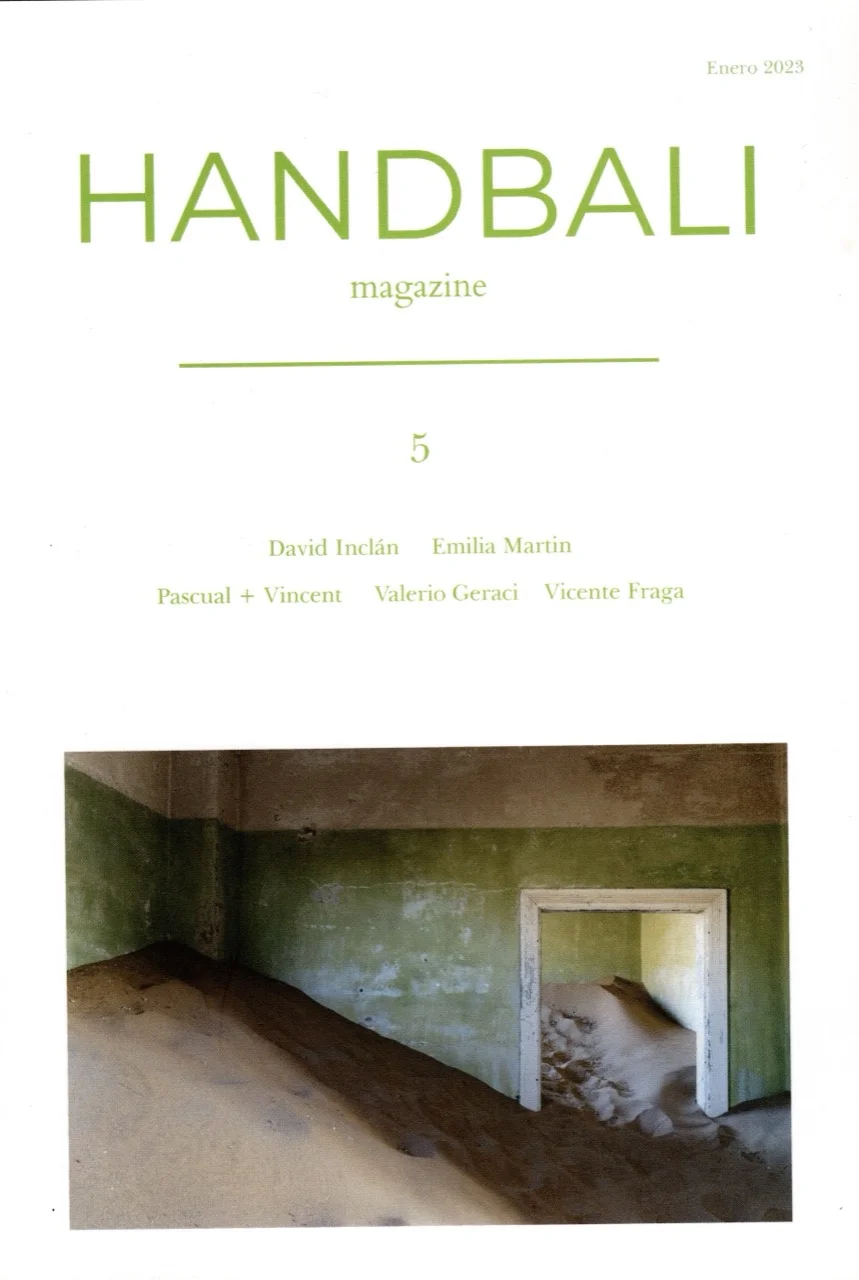
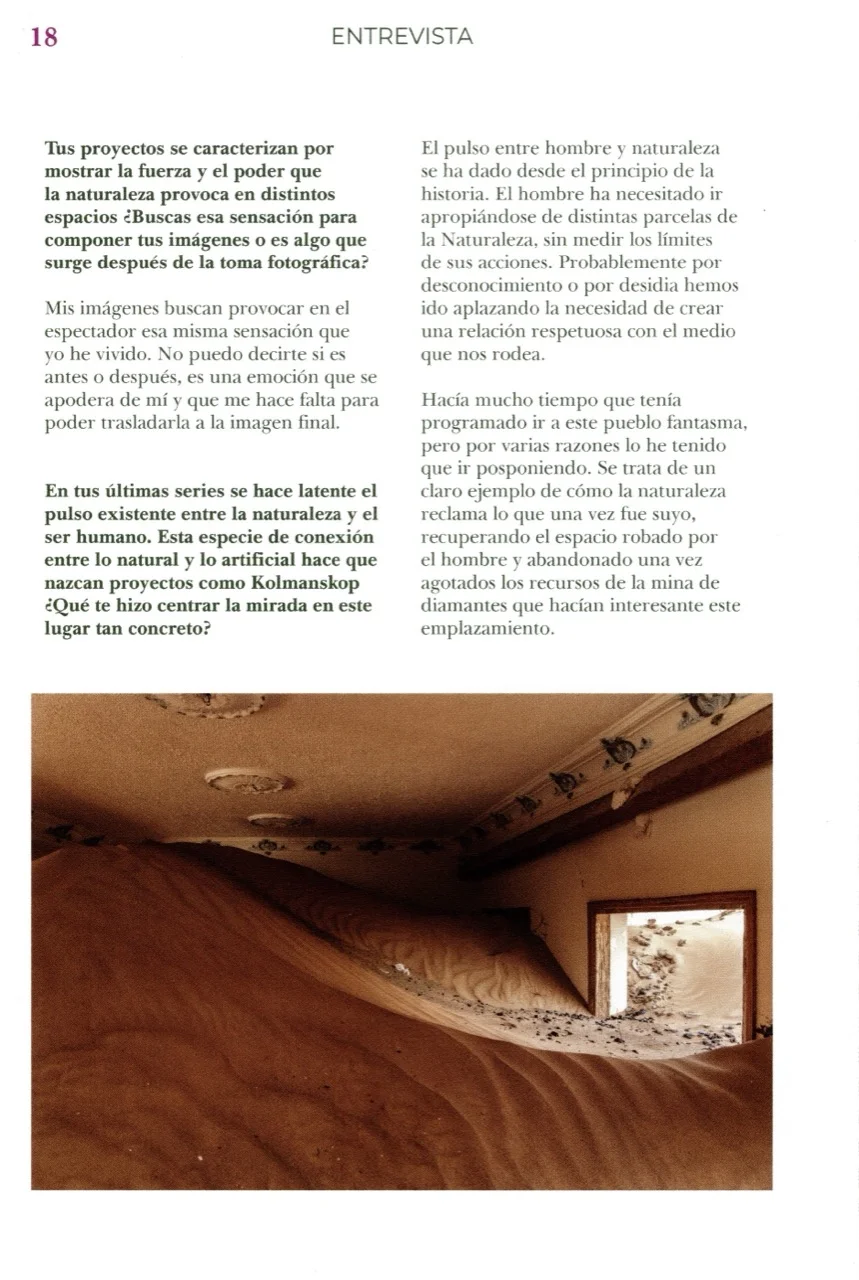
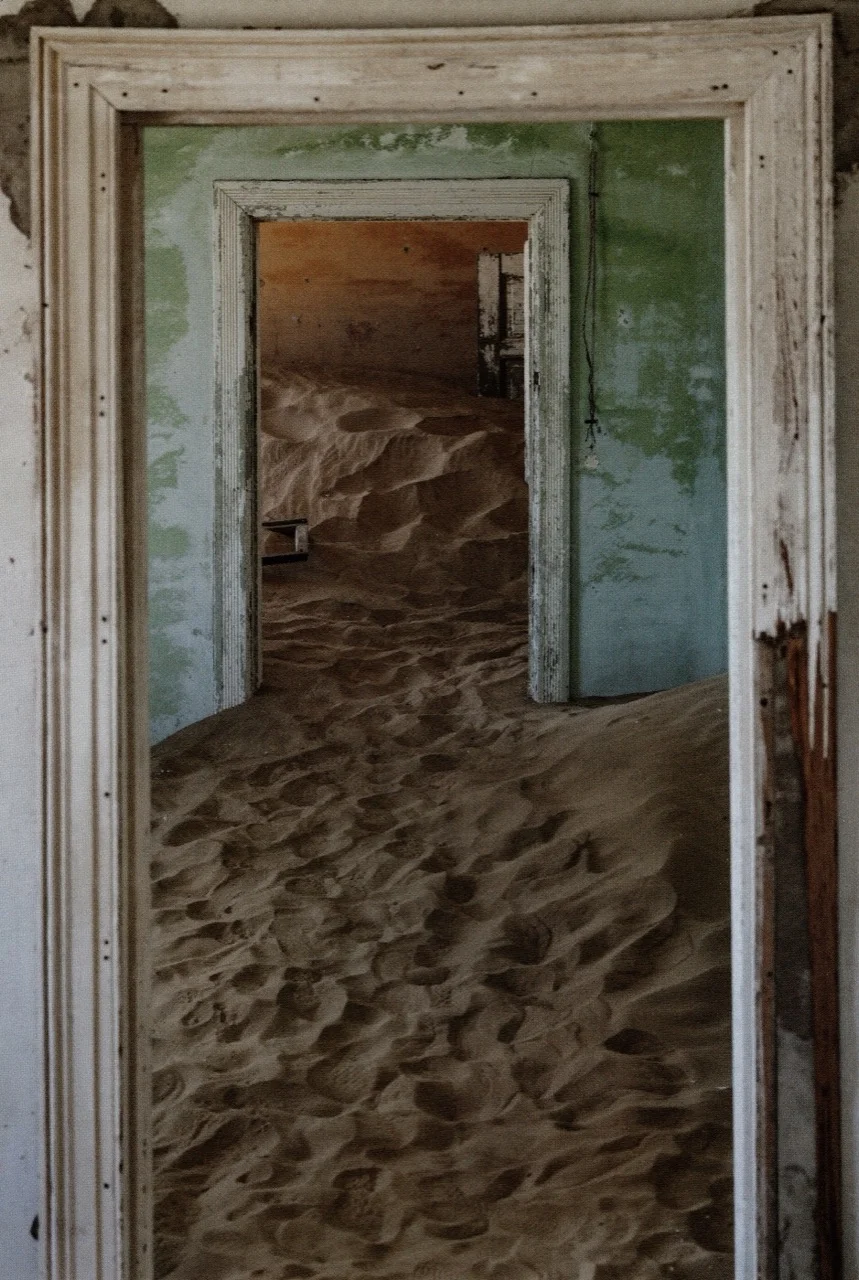
Hacía mucho tiempo que tenía programado ir a este pueblo fantasma, pero por varias razones lo he tenido que ir posponiendo. Se trata de un claro ejemplo de cómo la naturaleza reclama lo que una vez fue suyo, recuperando el espacio robado por el hombre y abandonado una vez agotados los recursos de la mina de diamantes que hacían interesante este emplazamiento.
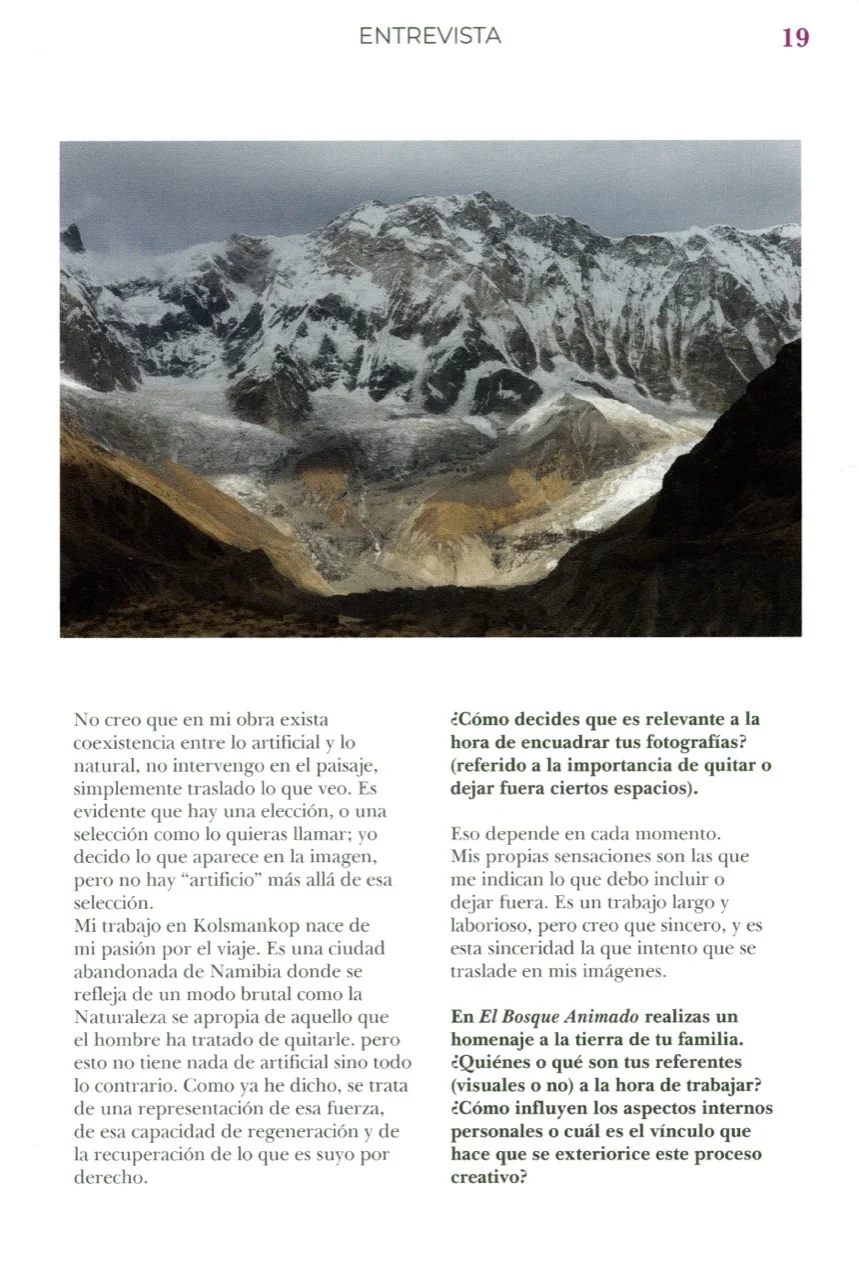
No creo que en mi obra exista coexistencia entre lo artificial y lo natural, no intervengo en el paisaje, simplemente traslado lo que veo. Es evidente que hay una elección, o una selección como lo quieras llamar; yo decido lo que aparece en la imagen, pero no hay “artificio” más allá de esa selección.
Mi trabajo en Kolsmankop nace de mi pasión por el viaje. Es una ciudad abandonada de Namibia donde se refleja de un modo brutal como la Naturaleza se apropia de aquello que el hombre ha tratado de quitarle. pero esto no tiene nada de artificial sino todo lo contrario. Como ya he dicho, se trata de una representación de esa fuerza, de esa capacidad de regeneración y de la recuperación de lo que es suyo por derecho.
¿Cómo decides que es relevante a la hora de encuadrar tus fotografías? (referido a la importancia de quitar o dejar fuera ciertos espacios).
Eso depende en cada momento. Mis propias sensaciones son las que me indican lo que debo incluir o dejar fuera. Es un trabajo largo y laborioso, pero creo que sincero, y es esta sinceridad la que intento que se traslade en mis imágenes.
En El Bosque Animado realizas un homenaje a la tierra de tu familia. ¿Quiénes o qué son tus referentes (visuales o no) a la hora de trabajar? ¿Cómo influyen los aspectos internos personales o cuál es el vínculo que hace que se exteriorice este proceso creativo?
“El Bosque Animado” es un proyecto muy personal que tiene mucho que ver precisamente con mi origen, con esos paisajes experimentados en la infancia, y a los que vuelvo recurrentemente; es en ese “volver al origen” al que hacíamos referencia al principio de la entrevista donde encuentro la inspiración para mis fotografías. La Naturaleza, el paisaje y mi lugar de origen son mis referentes a la hora de trabajar. A partir de ellos creo imágenes que, con formas muy puras, transmiten una emoción en el espectador.
En mis obras la vinculación con aspectos personales es absoluta: es la única manera que conozco de transmitir. Lo que me conmueve, me preocupa o me motiva, es lo que me lleva a buscar un tema que me ayude a expresarme a través de mi pasión, que es la fotografía.
En Handbali somos conscientes del auge de las inteligencias artificiales y de la aparición de nuevos softwares que permiten generar espacios inexistentes en el mundo real. Existe un equilibrio delicado entre ser uno mismo y hacer que tu obra sea entendible para el espectador. Como artista y fotógrafa, ¿dirías que estás abierta a experimentar nuevas aproximaciones visuales para con el paisaje?
Como ya he comentado anteriormente, yo no intervengo los espacios que fotografío, de manera que, por el momento, huyo de cualquier artificialidad. Creo que es positivo valerse de las ventajas que nos proporcionan las nuevas tecnologías, pero con límites.
Siempre estoy abierta a nuevas aproximaciones, es importante no cerrarte a nada que pueda aportar algo a tu obra, pero en este momento vital, mi interés está en plasmar a través de mis imágenes aquello que me conmueve o me hace sentir. Ese equilibrio del que hablas es realmente dificil de lograr, por eso intento librarme de cualquier artificialidad que obstaculice la relación entre mi obra y el espectador.
Para finalizar, ¿estás trabajando en algún proyecto nuevo que nos puedas contar?
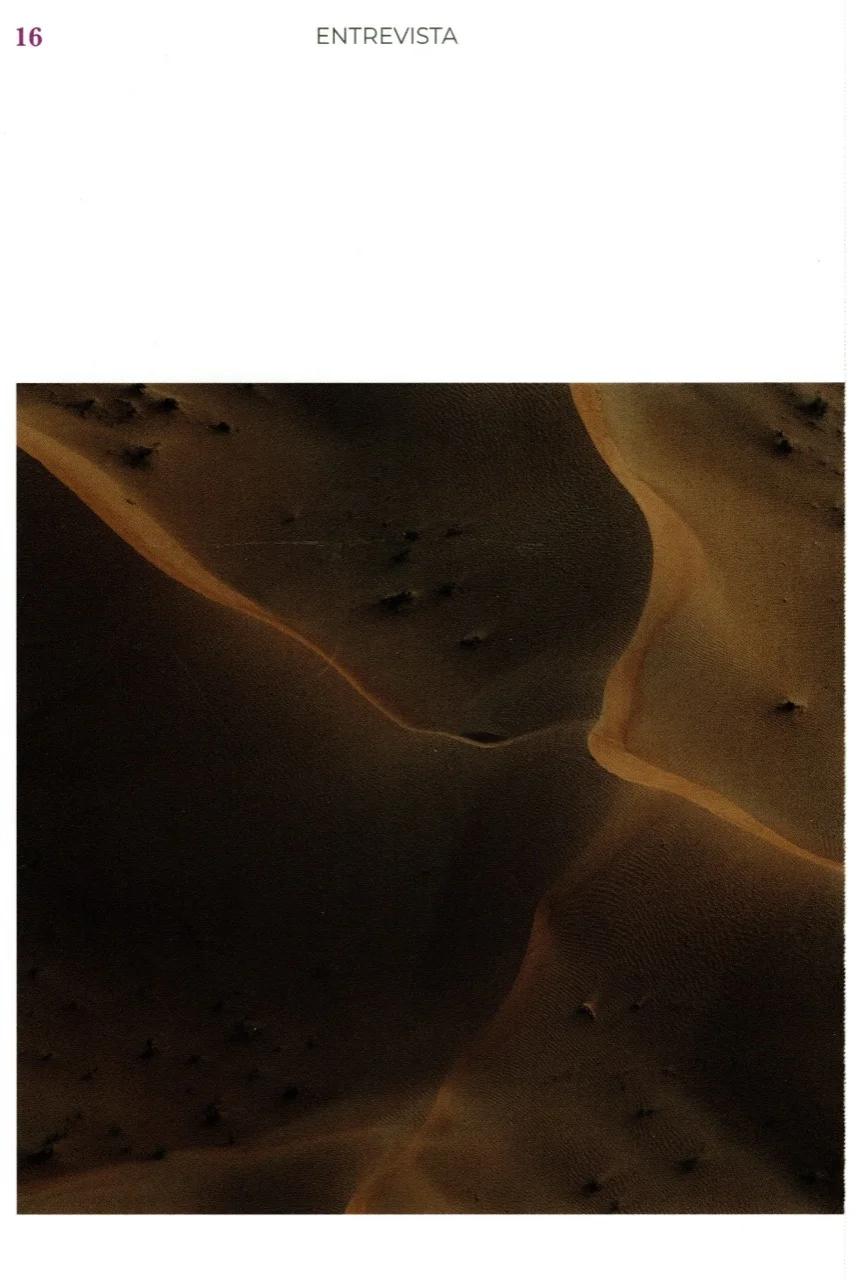
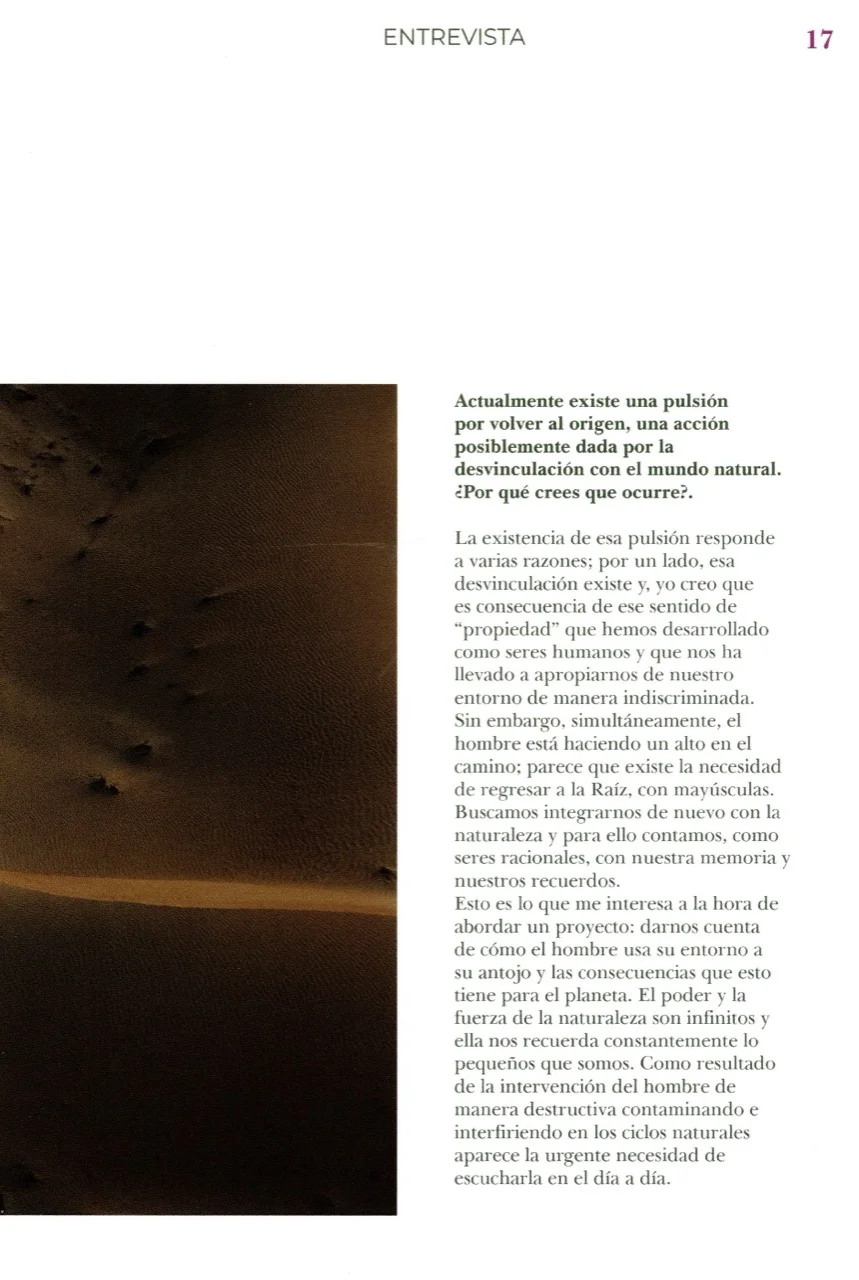
Pues en este momento, y siguiendo con mi proyecto “Nature Rules”, estoy, desde hace meses, estudiando y fotografiando los grandes salares y salinas del planeta; tanto los vírgenes y naturales como aquellos dónde la mano del hombre está interviniendo. La mayoría son desiertos de sal, pero no olvidemos que en los desiertos también hay mucha vida… Espero poder enseñarlo a lo largo de este año.
Currently there is a drive to return to the origin, an action possibly given by the disengagement with the natural world. Why do you think this is happening?
The existence of this drive responds to several reasons; on the one hand, this disengagement exists and, I believe, it is a consequence of the sense of “property” that we have developed as human beings and that has led us to appropriate our environment indiscriminately.However, at the same time, man is making a stop along the way; it seems that there is a need to return to the Root, with capital letters. We seek to integrate ourselves again with nature and for this we count, as rational beings, on our memory and our memories.
This is what interests me when approaching a project: to realize how man uses his environment as he pleases and the consequences this has for the planet. The power and strength of nature are infinite and she constantly reminds us how small we are. As a result of man’s destructive intervention, polluting and interfering with natural cycles, there is an urgent need to listen to her on a daily basis.
Your projects are characterized by showing the strength and power that nature provokes in different spaces. Do you look for that sensation to compose your images or is it something that arises after the photographic shot?
My images seek to provoke in the viewer that same sensation that I have experienced. I can’t tell you if it’s before or after, it’s an emotion that takes hold of me and that I need to be able to transfer it to the final image.
In your latest series the existing pulse between nature and human beings becomes latent. This kind of connection between the natural and the artificial gives rise to projects like Kolmanskop. What made you focus your gaze on this specific place?
The pulse between man and nature has been going on since the beginning of history. Man has needed to appropriate different parts of nature, without measuring the limits of his actions. Probably due to lack of knowledge or apathy, we have been postponing the need to create a respectful relationship with the environment that surrounds us.
I had been planning to go to this ghost town for a long time, but for various reasons I have had to postpone it. It is a clear example of how nature reclaims what was once its own, recovering the space stolen by man and abandoned once the resources of the diamond mine that made this site interesting were exhausted.
I do not believe that in my work there is coexistence between the artificial and the natural, I do not intervene in the landscape, I simply transfer what I see. It is evident that there is a choice, or a selection as you want to call it; I decide what appears in the image, but there is no “artifice” beyond that selection.
In The Animated Forest you pay homage to the land of your family. Who or what are your references (visual or not) when working? How do the internal personal aspects influence or what is the link that makes this creative process externalize?
“The Animated Forest” is a very personal project that has a lot to do precisely with my origin, with those landscapes experienced in childhood, and to which I return recurrently; it is in this “return to the origin” that we referred to at the beginning of the interview where I find the inspiration for my photographs. Nature, landscape and my place of origin are my references when I work. From them I create images that, with very pure forms, transmit an emotion to the viewer.
In my works the link with personal aspects is absolute: it is the only way I know how to transmit. What moves me, worries me or motivates me, is what leads me to look for a subject that helps me to express myself through my passion, which is photography.
At Handbali we are aware of the rise of artificial intelligences and the appearance of new software that allows us to generate spaces that do not exist in the real world. There is a delicate balance between being yourself and making your work understandable to the viewer. As an artist and photographer, would you say you are open to experimenting with new visual approaches to landscape?
As I mentioned before, I don’t intervene in the spaces I photograph, so for the moment I avoid any artificiality. I think it is positive to take advantage of the benefits that new technologies provide us, but with limits.
I am always open to new approaches, it is important not to close yourself to anything that can contribute something to your work, but at this vital moment, my interest is in capturing through my images what moves me or makes me feel. That balance you are talking about is really difficult to achieve, so I try to get rid of any artificiality that hinders the relationship between my work and the viewer.
Finally, are you working on any new project that you can tell us about?
Well, at the moment, and continuing with my project “Nature Rules”, I have been studying and photographing the great salt flats and salt flats of the planet for months; both the virgin and natural ones and those where the hand of man is intervening. Most of them are salt deserts, but let’s not forget that in the deserts there is also a lot of life… I hope to be able to show it during this year.