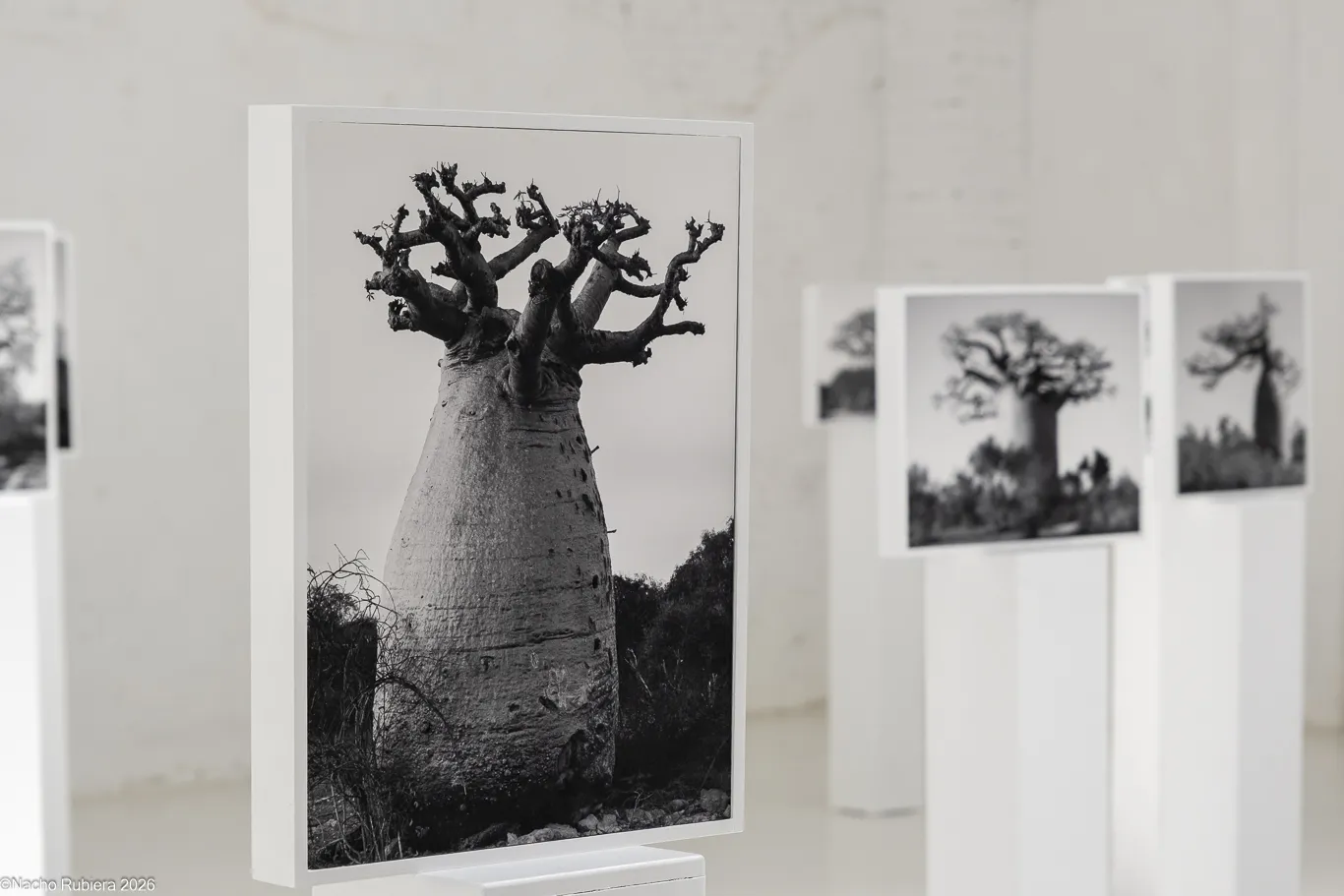
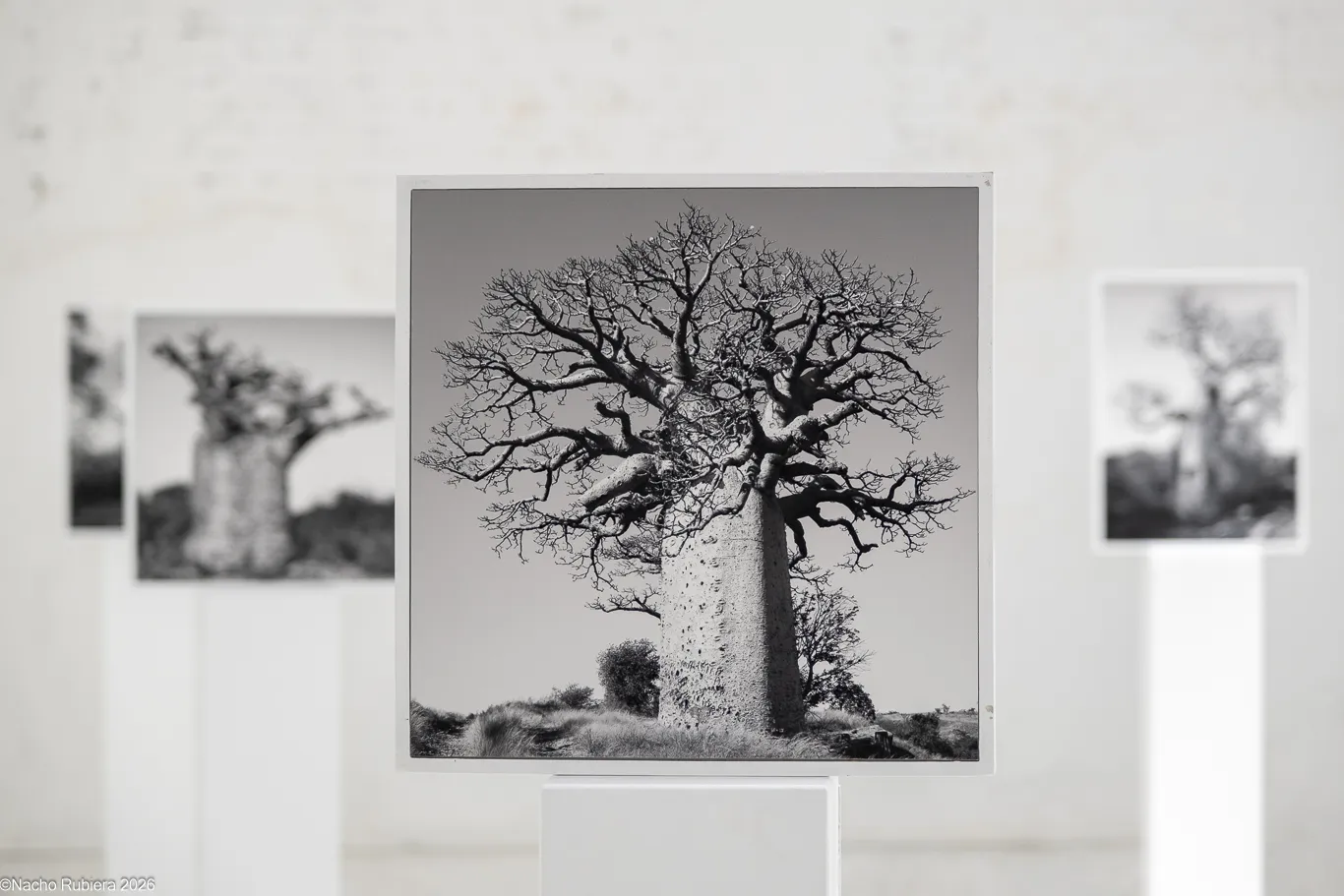
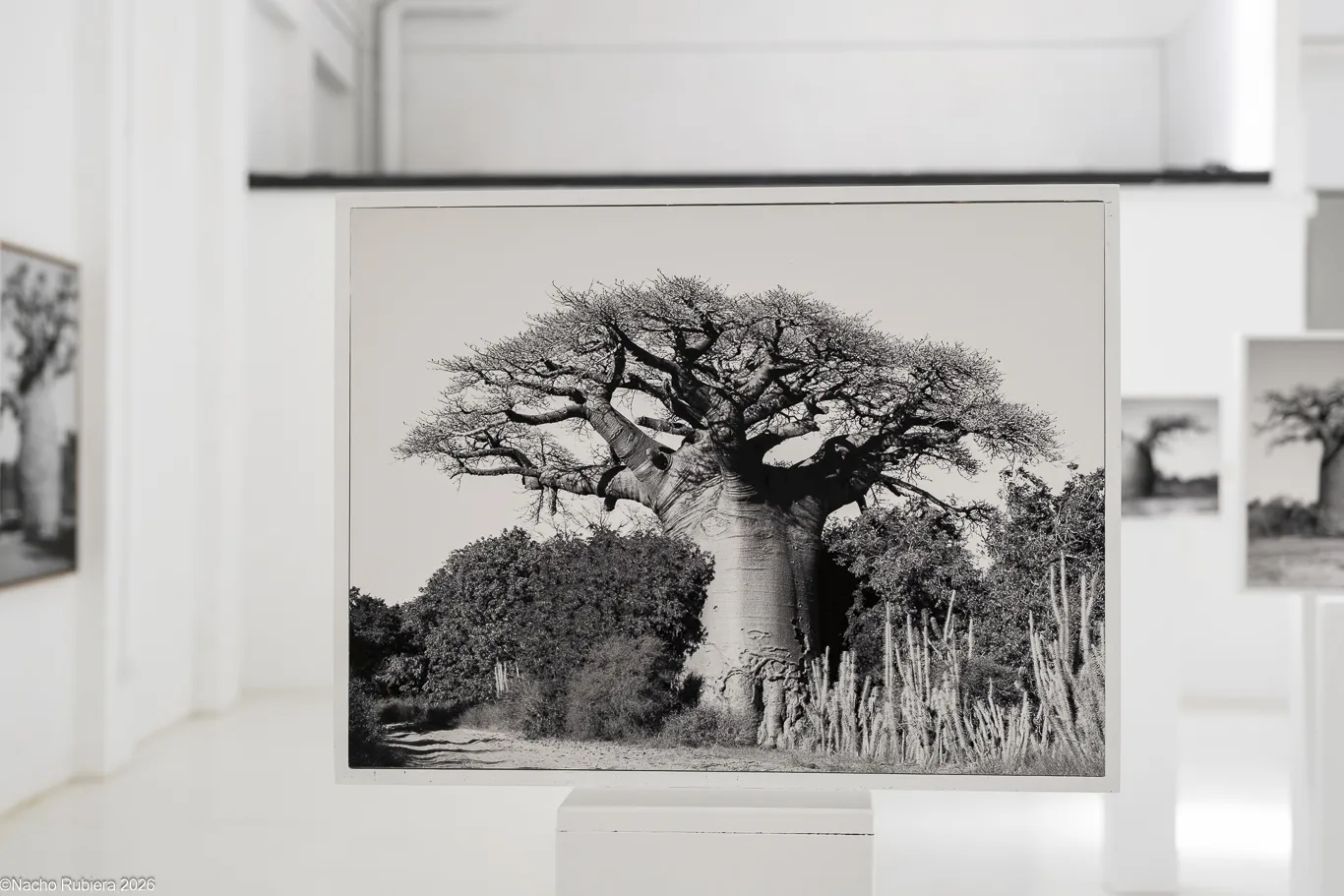
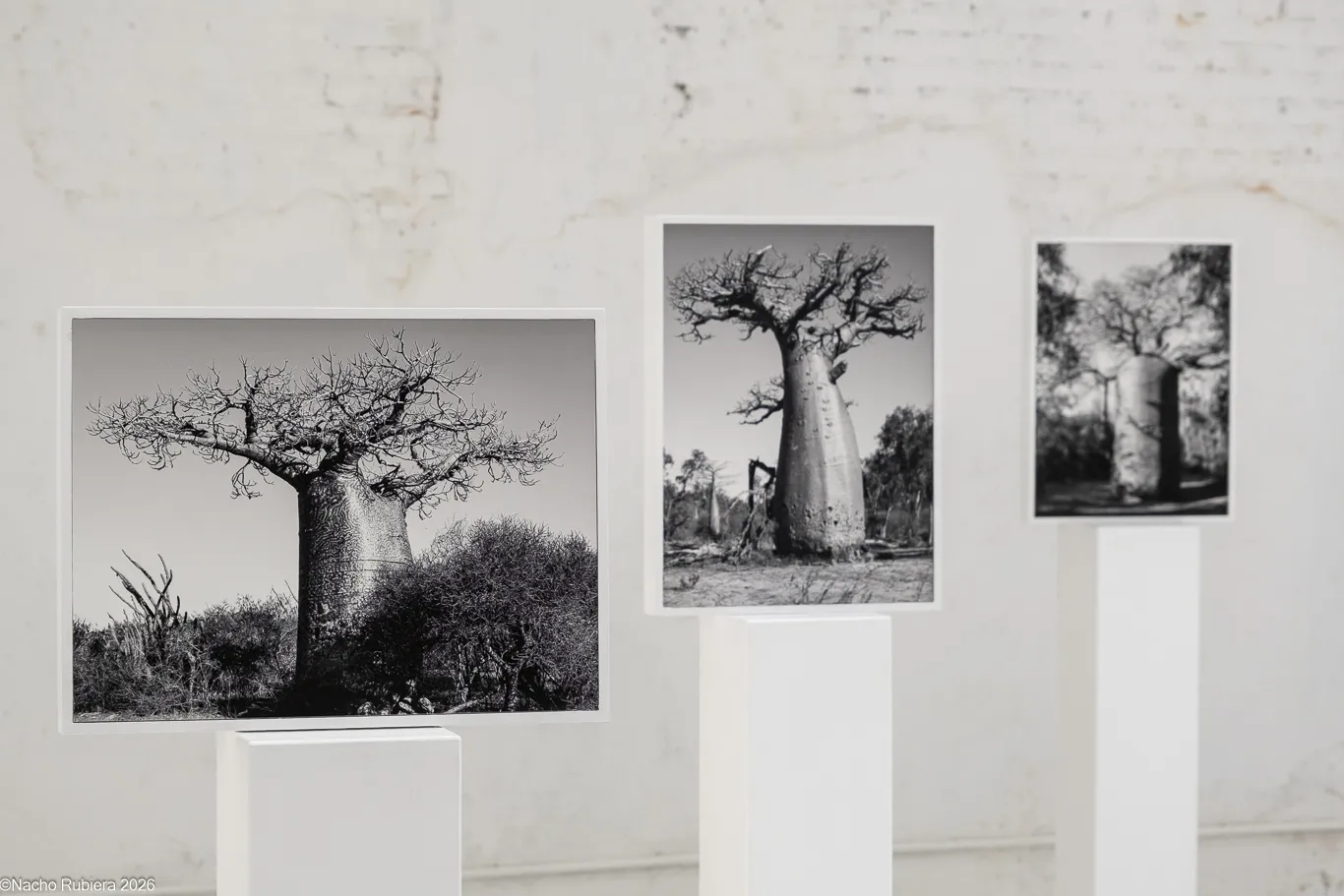
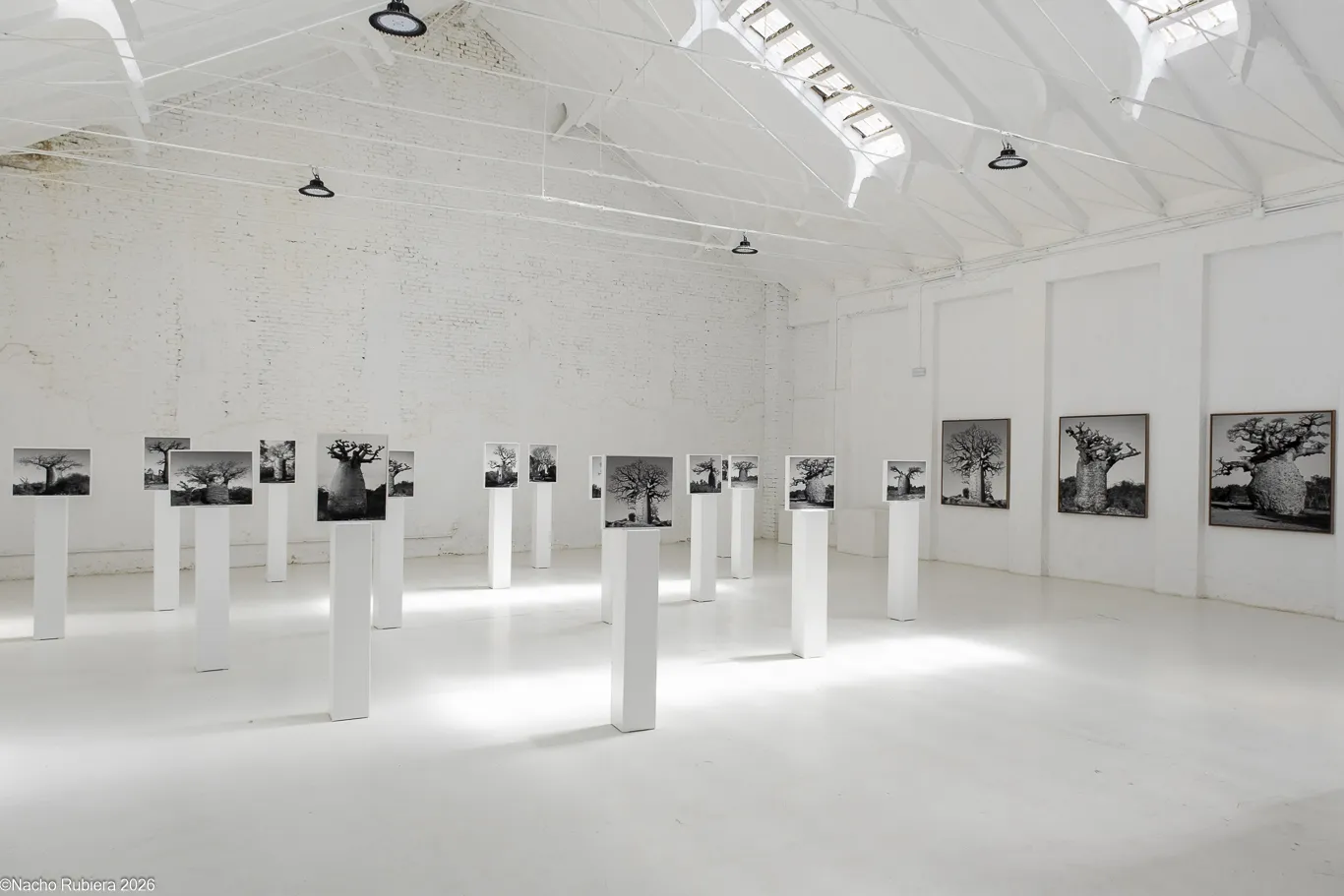
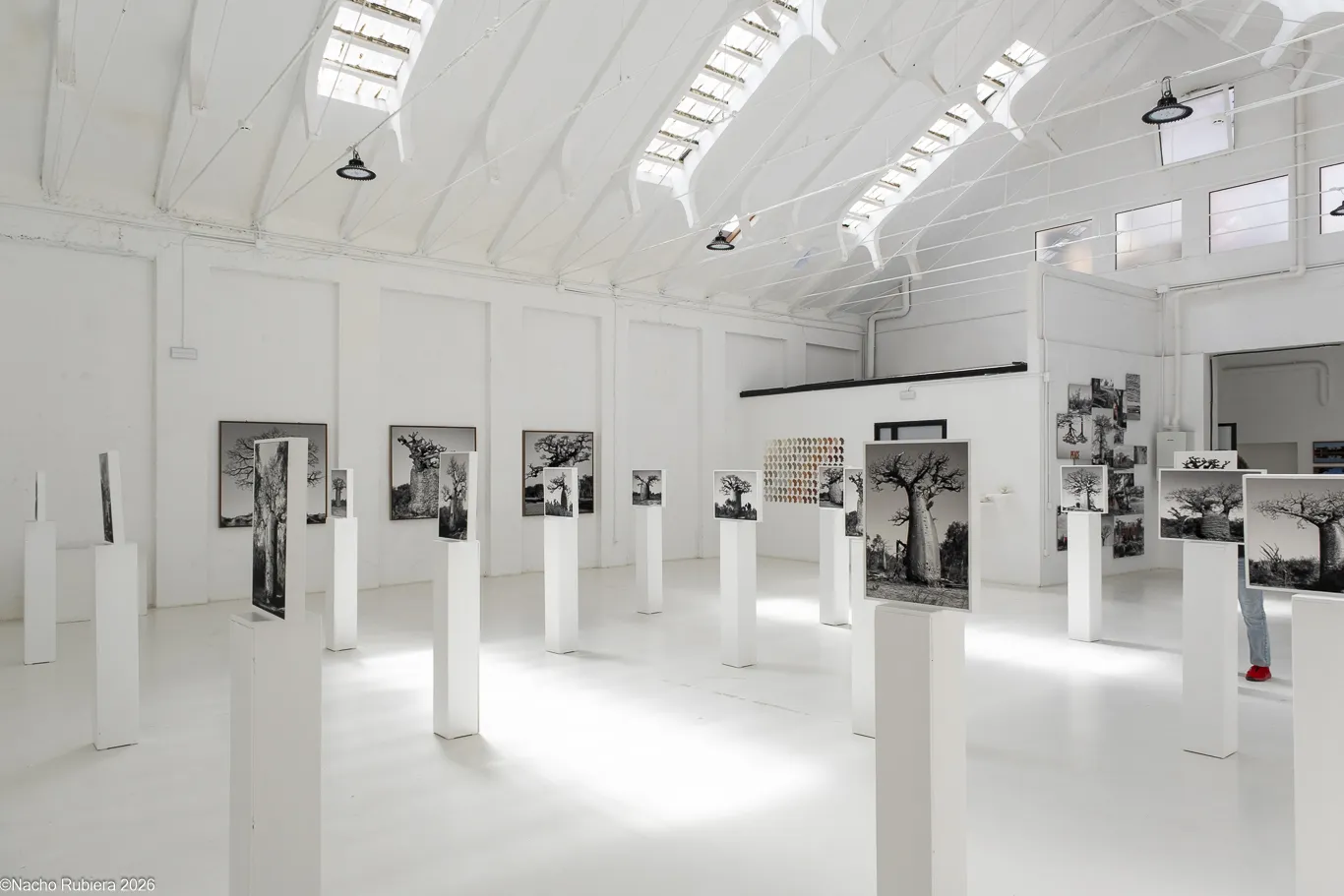
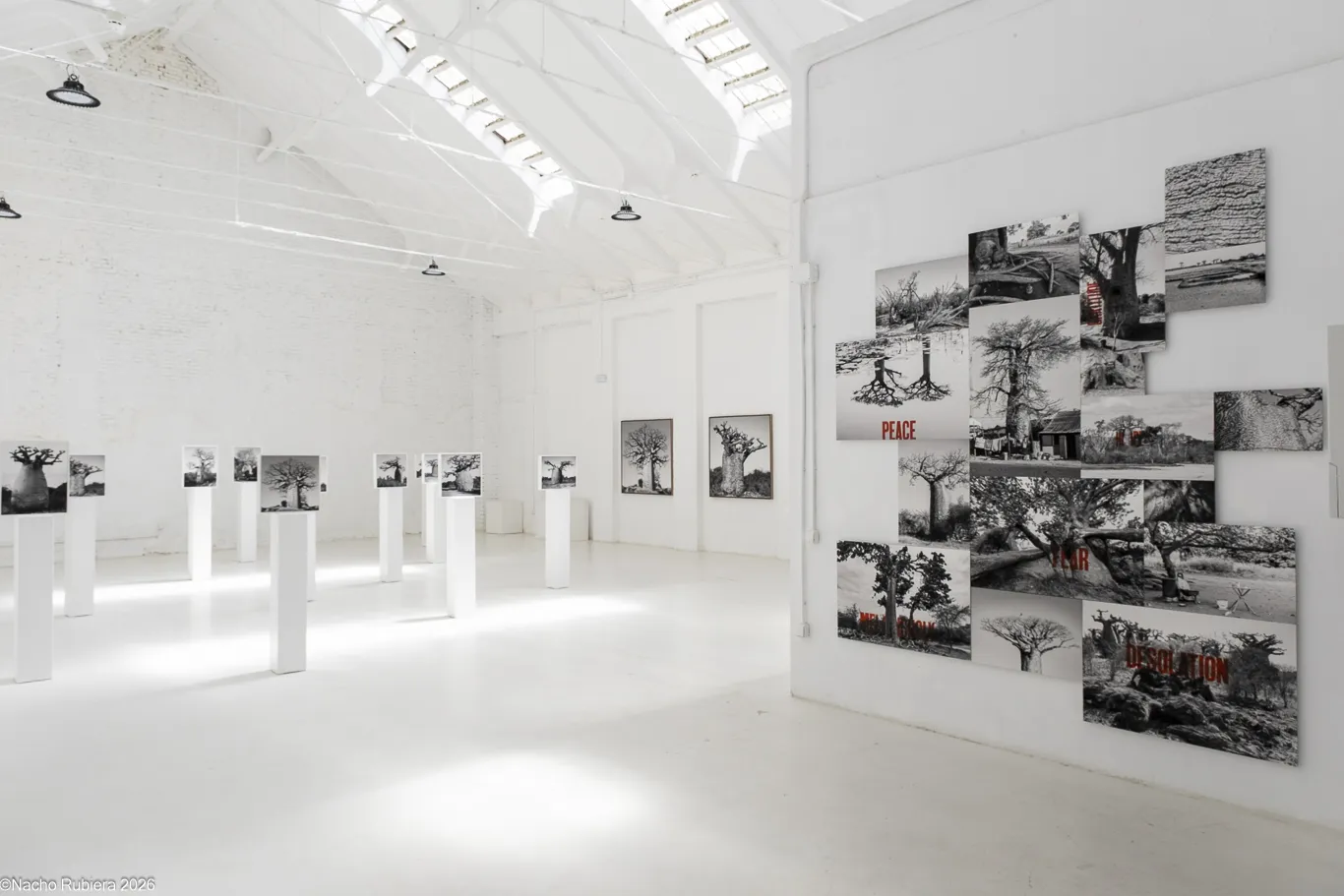
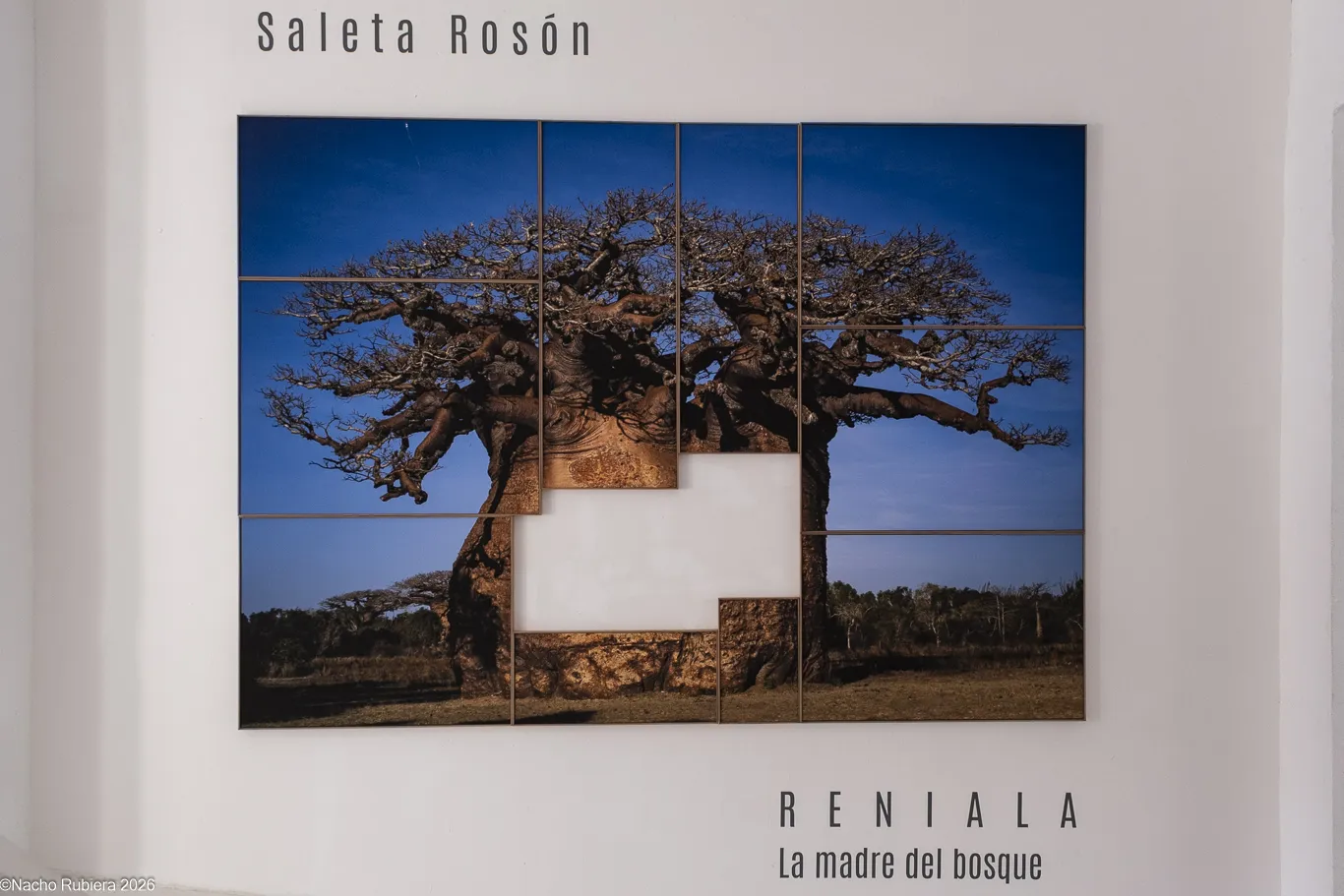
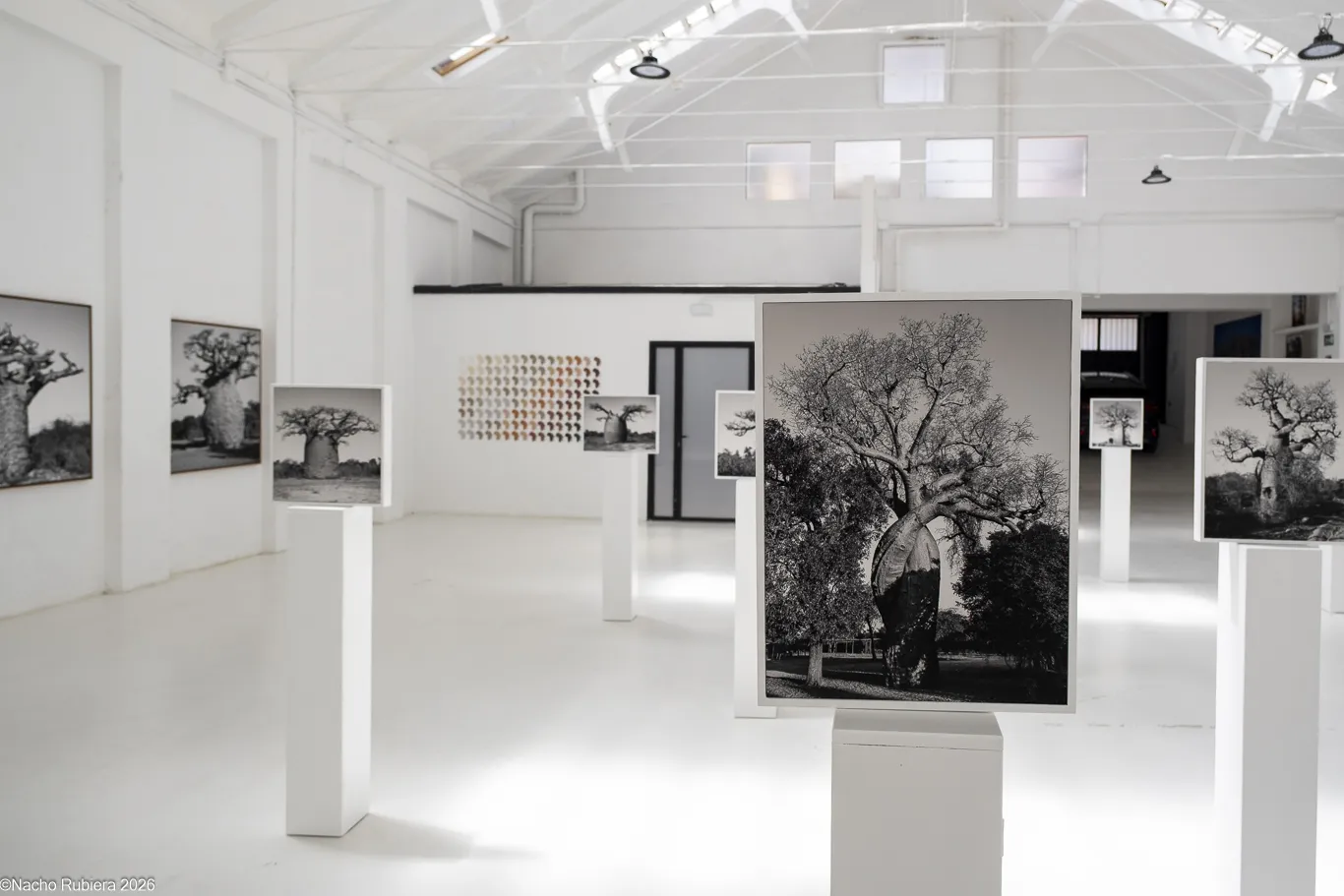
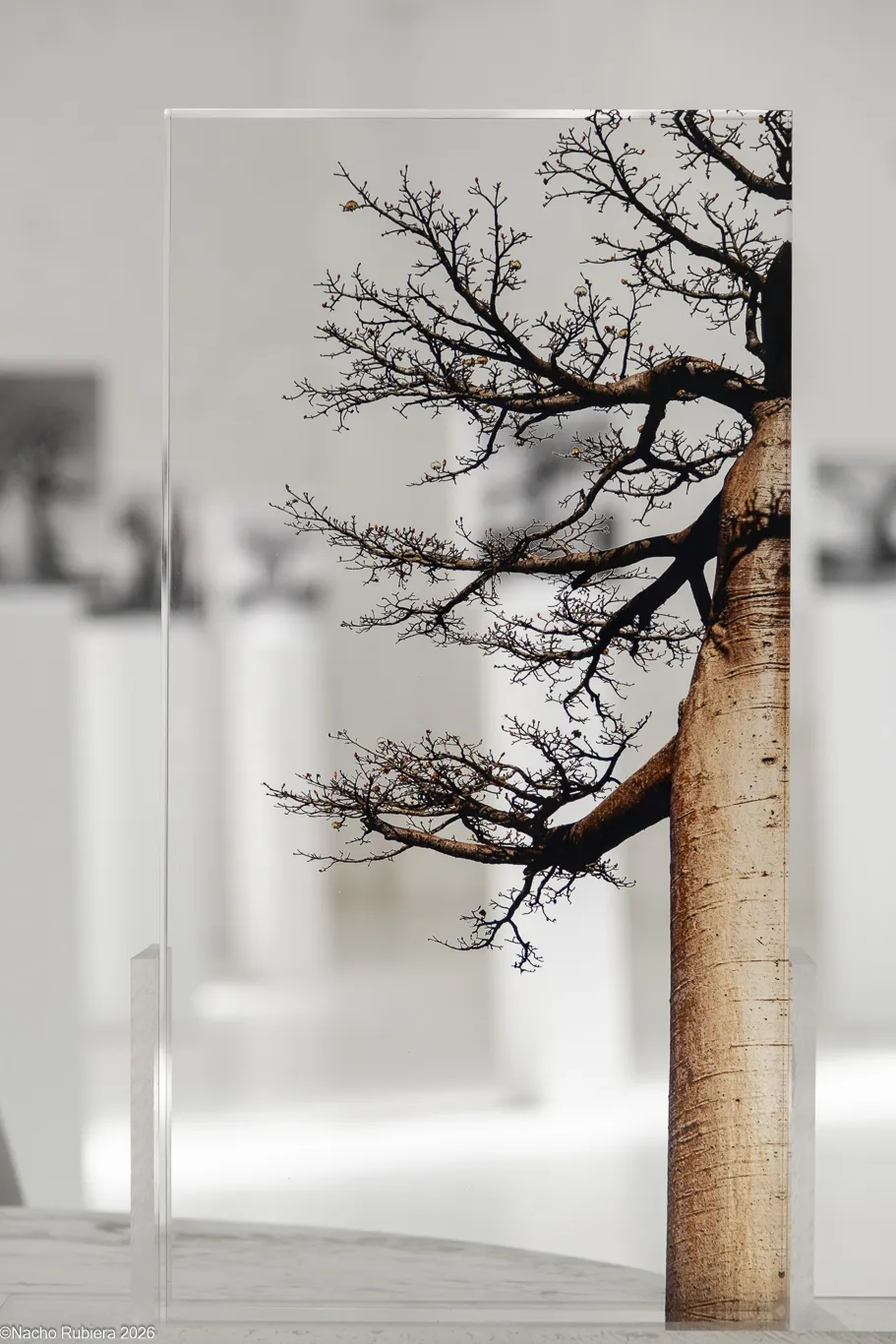
RENIALA LA MADRE DEL BOSQUE
18.06.2026 – 12.07.2026 Espacio Argen, Madrid
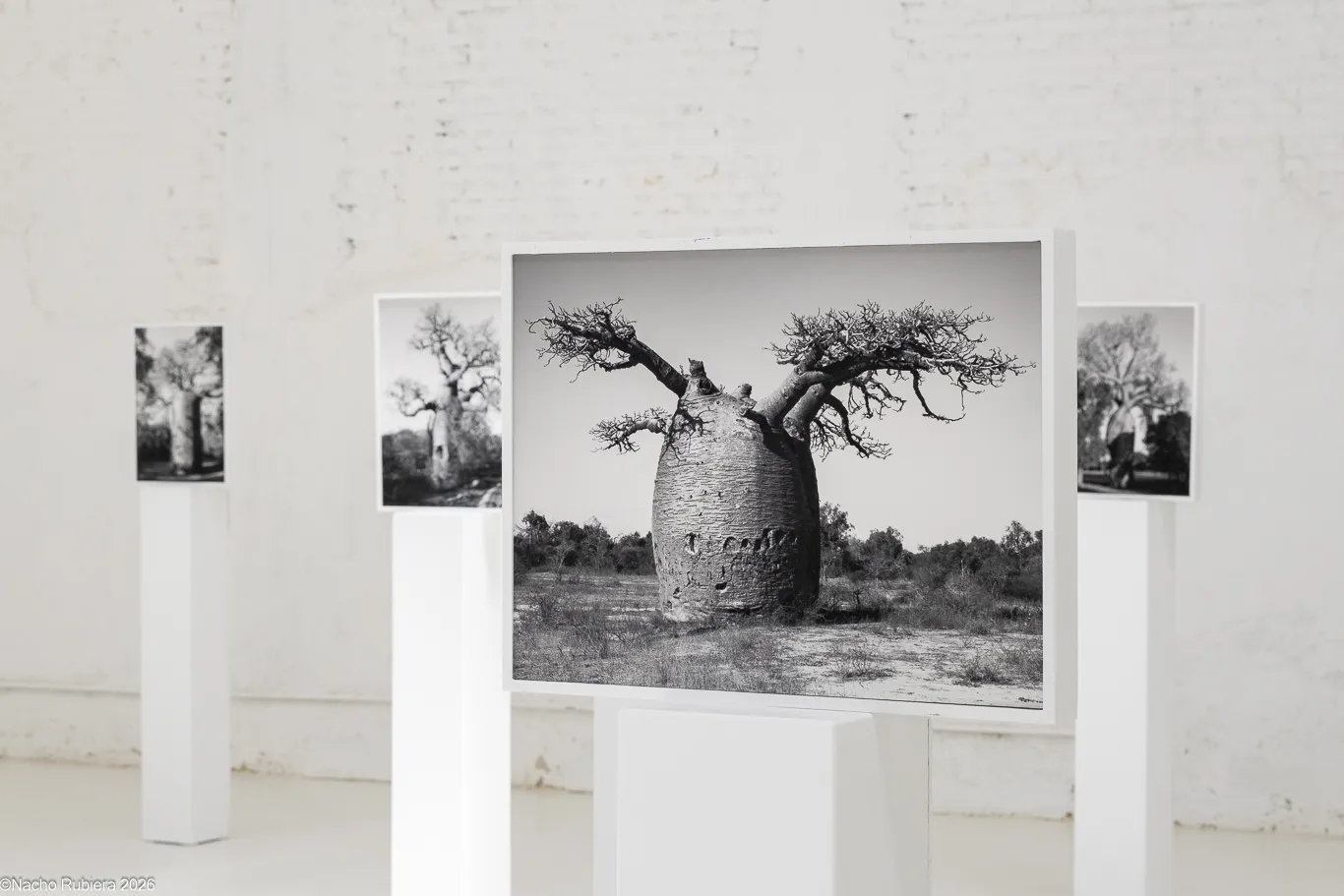
El baobab es un árbol que siempre me ha llamado especialmente la atención: desde pequeña, cuando leí ¨El Principito¨ y después cuando vi el primero alzarse majestuoso en mitad de la sabana en Sudáfrica.
En casi toda África, los baobabs han sido elementos centrales en la vida espiritual y cultural de muchas comunidades. Son considerados como lugares de reunión para solventar disputas, para celebrar rituales y las comunidades consideran que en sus troncos habitan los espíritus de sus antepasados. A veces tienen un carácter funerario y son usados como cementerios.
También son recursos vitales para ellos: en algunos lugares se utilizan como aljibes, sus frutos son ricos en vitaminas, sus hojas son utilizadas en la medicina tradicional y su corteza que es muy fibrosa se utiliza en la construcción de tejados, cuerdas etc.
Sin embargo, hoy en día, estos árboles sagrados se enfrentan tanto a la deforestación como al cambio climático. Existen estudios publicados acerca del colapso de varios baobabs milenarios debido a las alteraciones de las temperaturas extremas y la falta de lluvias consecuencia ese cambio climático, y a la presión agrícola y la expansión de los poblados y ciudades por lo que la tala de estos está convirtiéndose en algo habitual.
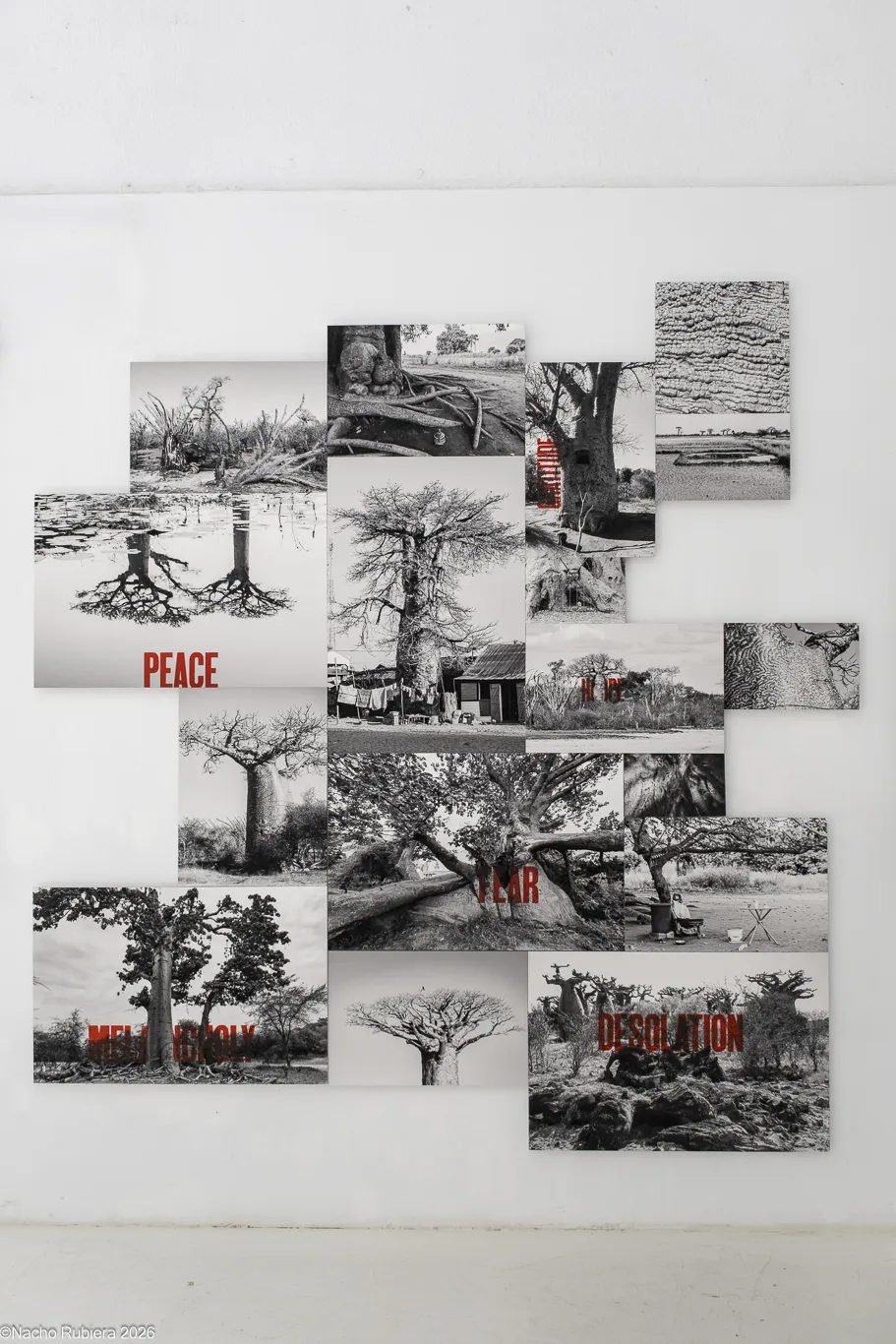
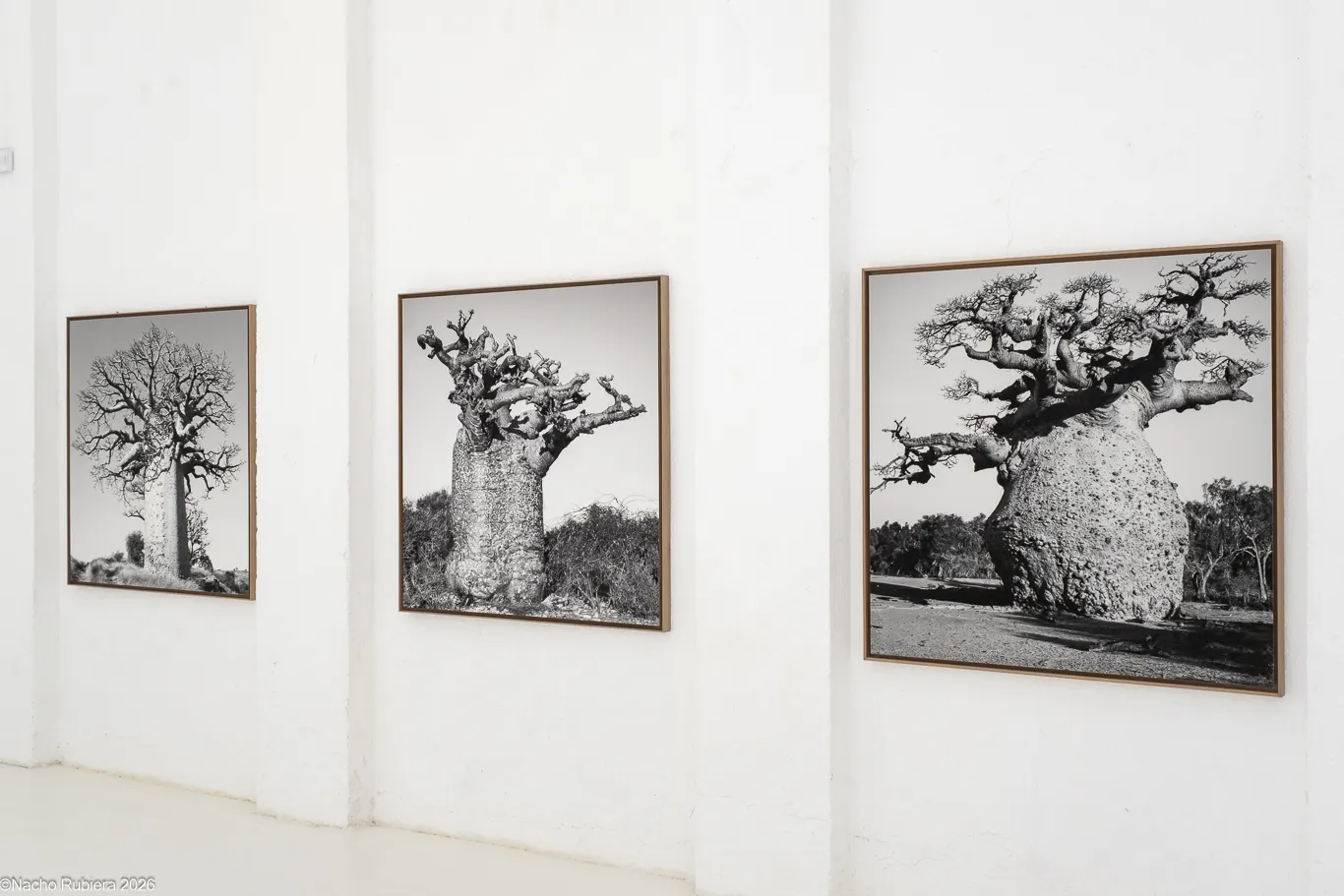
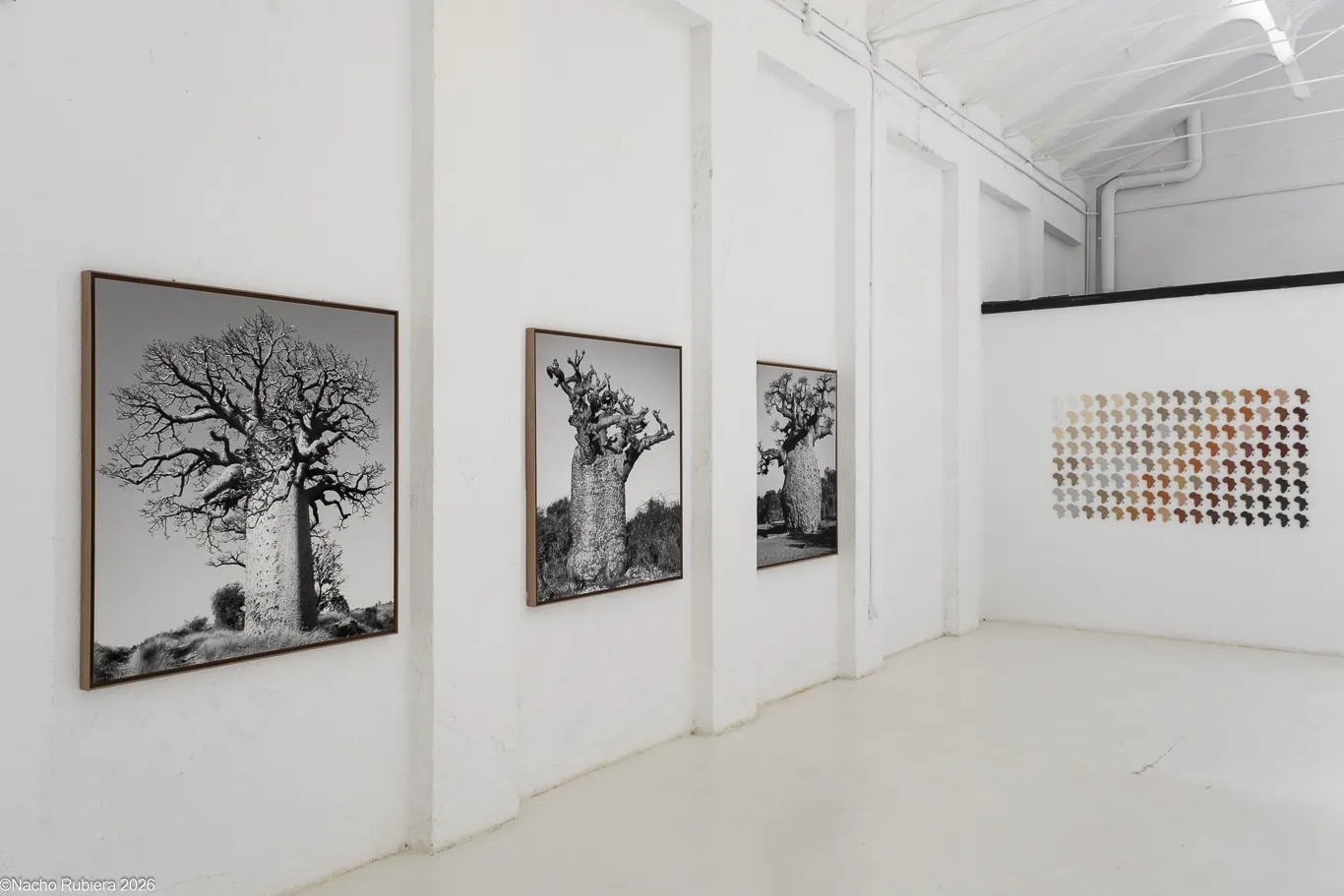
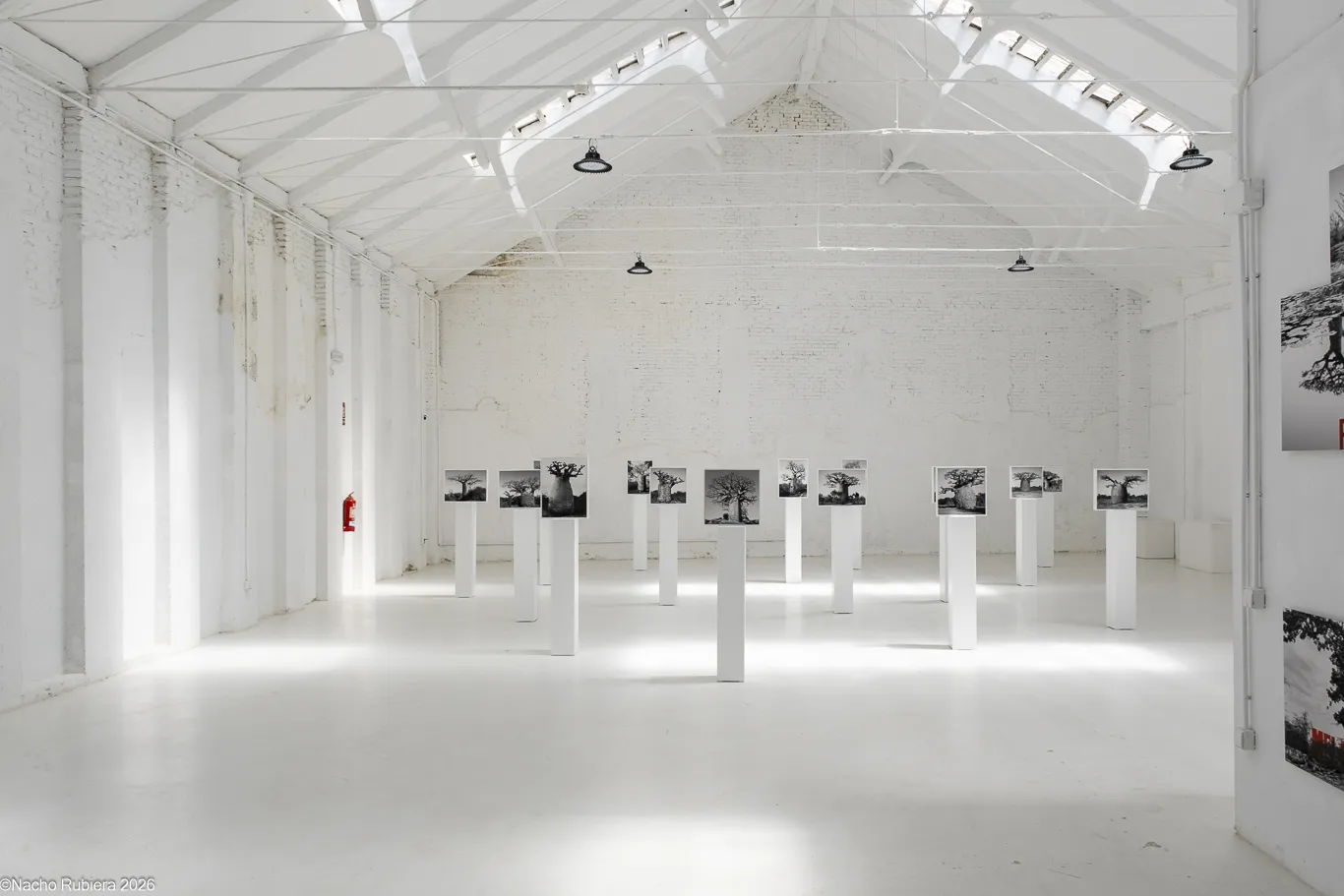
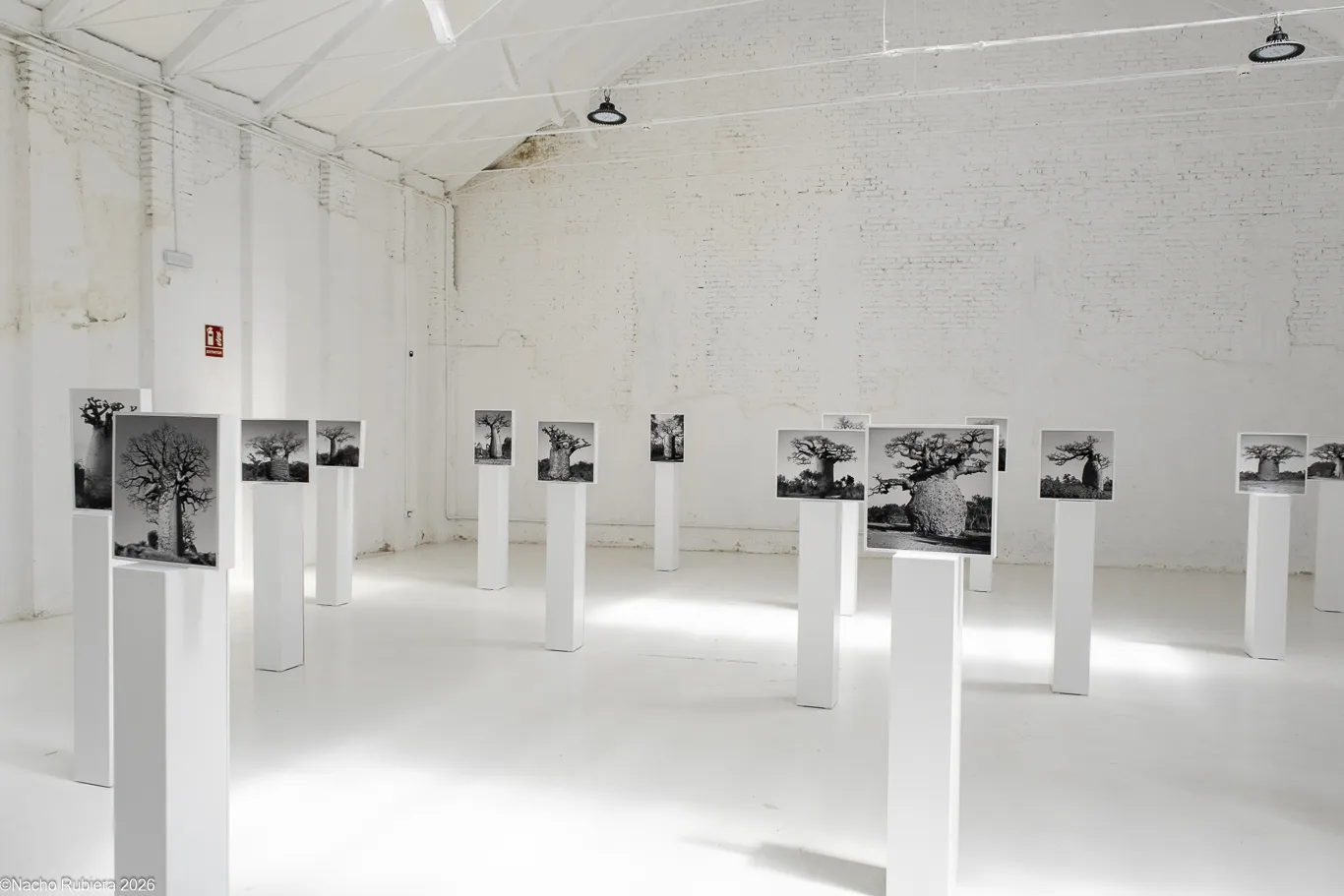
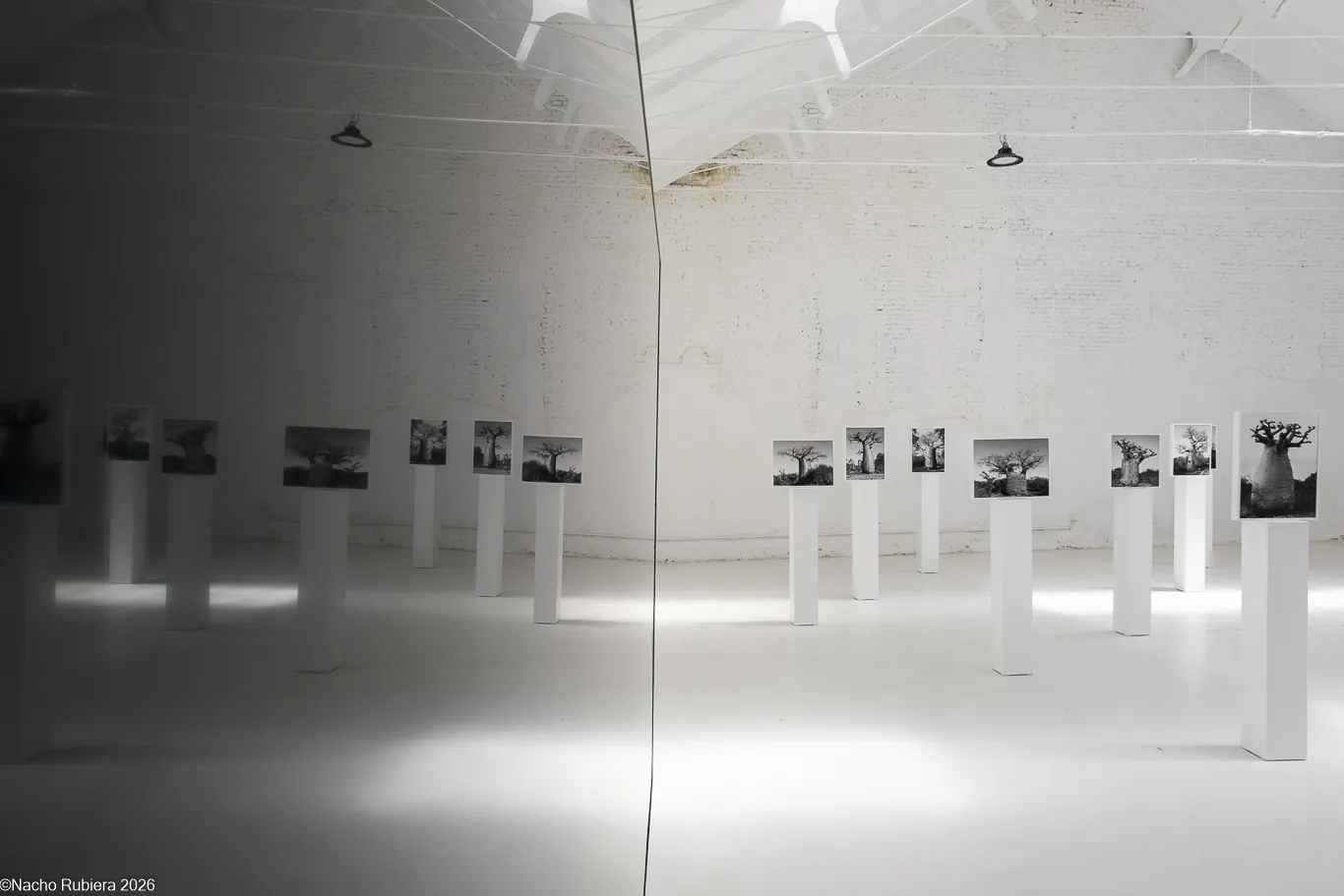
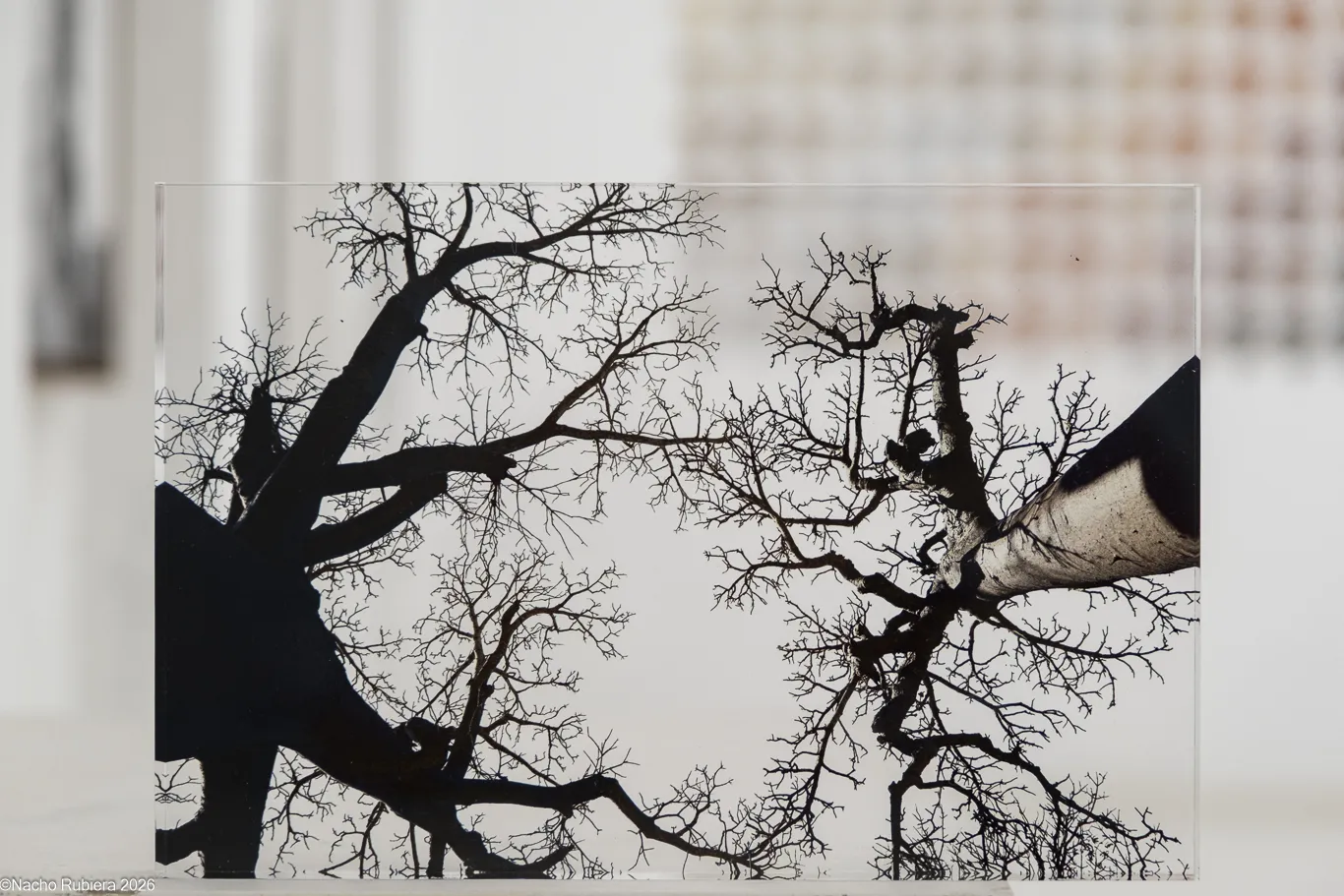
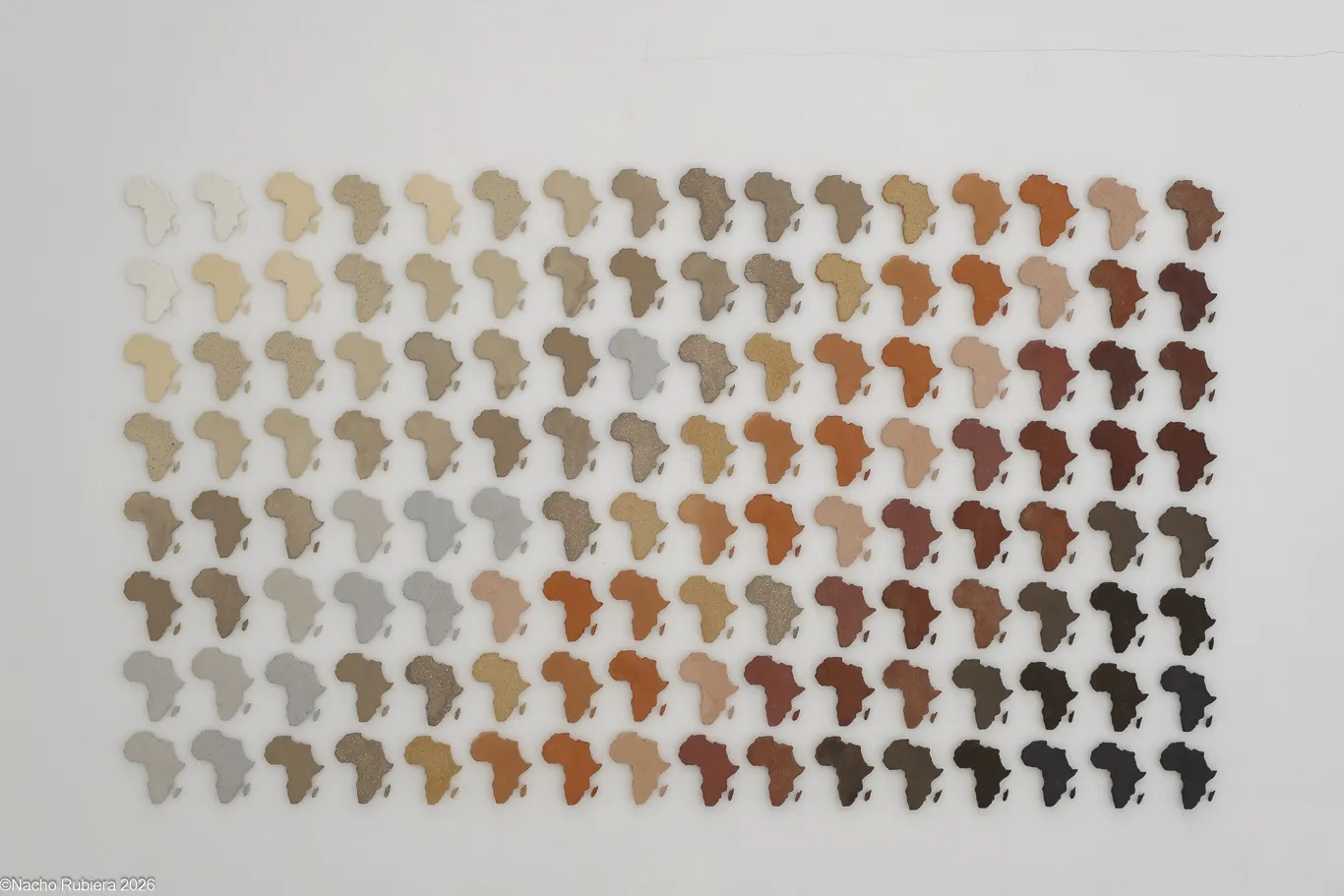
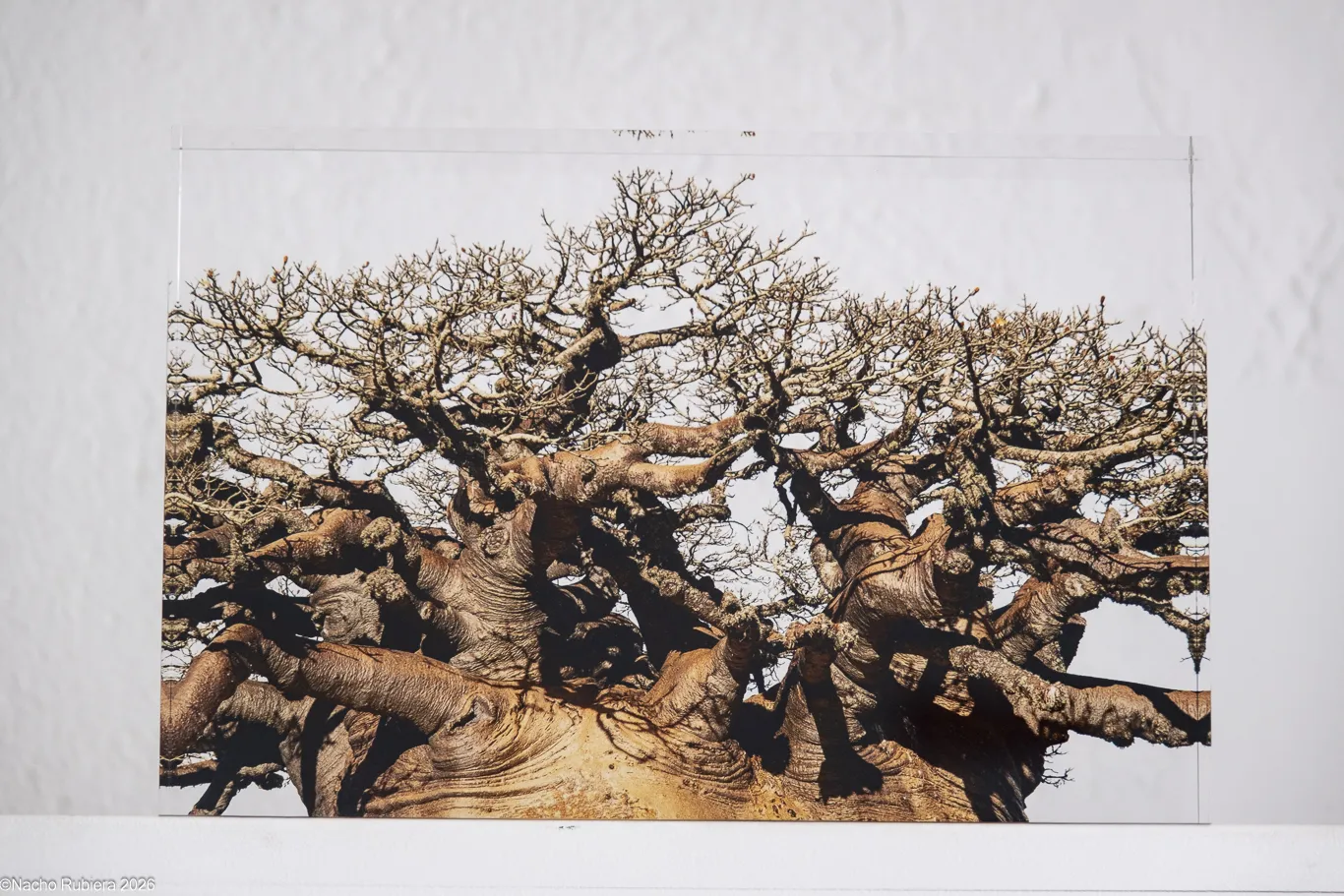
Siguiendo con lo que vengo mostrando en mis últimos trabajos sobre como el ser humano interviene el paisaje y de forma muy activa en la transformación del territorio, pretendo, con este proyecto reivindicar la figura del baobab de la manera más plástica posible, sin dejar de plasmar a través del mismo la realidad de lo que están sufriendo y la necesidad de concienciarnos, una vez más, de la importancia de cuidar nuestro planeta antes de que no haya vuelta atrás.
The baobab is a tree that has always held a special fascination for me: ever since I was a little girl, when I read *The Little Prince*, and later when I saw my first one standing majestically in the middle of the savanna in South Africa.
Throughout most of Africa, baobabs have been central to the spiritual and cultural life of many communities. They are regarded as gathering places for resolving disputes and performing rituals, and communities believe that the spirits of their ancestors dwell within their trunks. Sometimes they serve a funerary purpose and are used as cemeteries.
They are also vital resources for these communities: in some places, they are used as water cisterns; their fruits are rich in vitamins; their leaves are used in traditional medicine; and their highly fibrous bark is used in the construction of roofs, ropes, and other items.
However, today these sacred trees face both deforestation and climate change. Published studies document the collapse of several millennia-old baobabs due to extreme temperature fluctuations and lack of rainfall resulting from climate change, as well as agricultural pressure and the expansion of towns and cities—all of which are making the felling of these trees increasingly common.
Building on what I have been exploring in my recent works—how human beings intervene in the landscape and play a very active role in transforming the land—I aim, with this project, to celebrate the baobab tree in the most vivid way possible, while also using it to convey the reality of what these trees are enduring and the need to raise awareness, once again, of the importance of caring for our planet before it is too late.